Dry Needling in Swansea
There is a knot in your shoulder that a thumb can find in two seconds and a month of stretching has not touched. Some muscle sits too deep and holds too hard to reach from the outside.
What is dry needling?
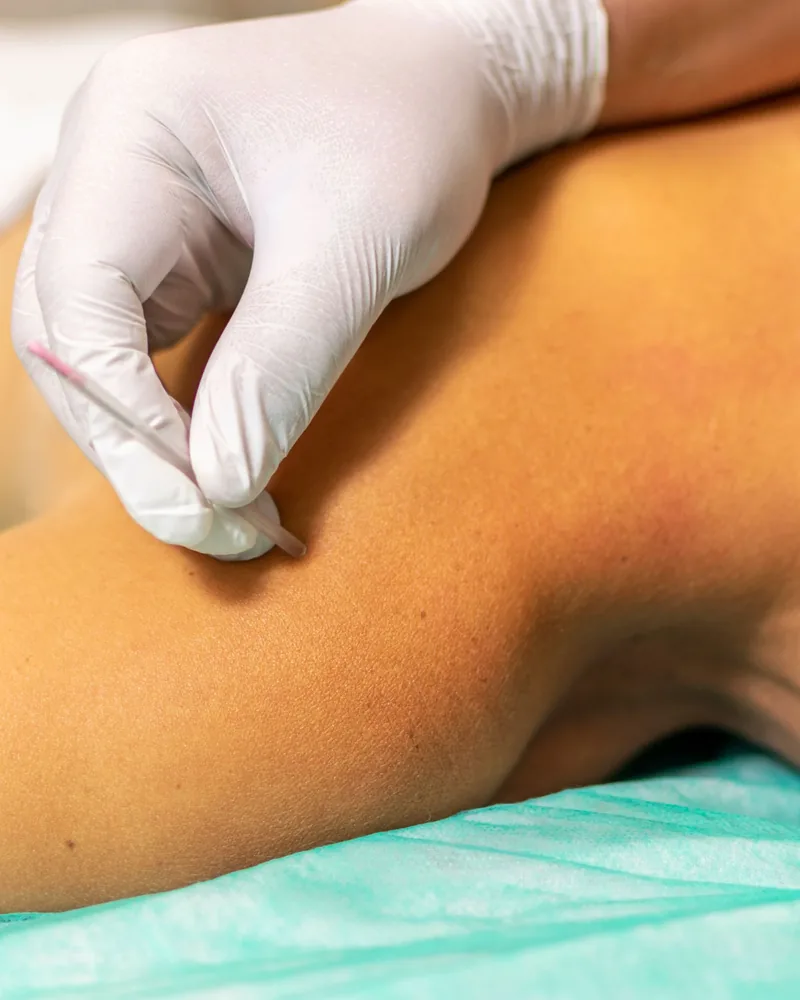
Dry needling uses a thin solid needle, with nothing injected through it, placed directly into a taut band inside a muscle. The word dry is literal: there is no medication involved. When the needle reaches the trigger point, the band usually gives one brief involuntary twitch and then stops holding. That twitch is the treatment. It is a mechanical and neurological reset of muscle that has been contracted so long it no longer responds to stretching, heat, or pressure applied from the surface. It is not acupuncture. The map is anatomy rather than meridians, and the target is one specific muscle your therapist has already identified as the one producing your symptom.
At Specht Physical Therapy we use ultrasound imaging to pinpoint the area before needling, so placement is based on what is actually under the skin rather than on surface landmarks alone. Needling itself occupies a few minutes of your 40 minute one on one appointment in Swansea or Providence. The rest of the appointment goes to hands-on work and exercise, because a muscle that has just released needs a reason to stay released. Many people notice a difference the same day. How many visits you need depends on how long that muscle has been guarding, and your therapist gives you an honest estimate at your evaluation rather than selling you a package up front.
Who it's for.
Dry needling is not the first tool for every problem, and it is never the only tool. These are the three situations where it earns its place in a plan.
A trigger point that outlasted everything else
Stretching, a foam roller, heat and medication have each had their turn on the same knot in your neck, calf or glute. A needle reaches that band directly instead of pulling on the ends of it. The outcome we work toward: the muscle stops flaring every few days, so strengthening finally gets a chance to hold.
Headaches and jaw pain driven by muscle
Tension headaches, migraine patterns and jaw discomfort often trace back to specific muscles of the neck, jaw and upper shoulder. Those muscles are reachable with a needle and awkward to reach any other way. The outcome we work toward: fewer and milder episodes, and a clear sense of which muscle sets them off.
Stiffness and scar tissue after surgery
The repair healed, but the tissue around it stayed thick and unwilling, and every range of motion session hits the same wall. Needling into the surrounding muscle and adhesion restores glide through the area. The outcome we work toward: mobility gains you can measure, not just a looser feeling for an hour.
What to expect in a session.
Almost all of the apprehension about needling comes from not knowing what the sensation is. Here is exactly what happens, in order.
Screening and consent
Before anything else, your therapist goes through your medical history, asks what medications you take, explains what the needle does and describes what you are likely to feel. Nothing proceeds until you say yes. This is also where you say if needles bother you, because that is genuinely useful to know in advance rather than halfway through.
Palpation, imaging and placement
Your therapist finds the taut band by hand, then confirms the area with ultrasound imaging. The needle goes in through a single point. Most people describe a dull deep ache and a quick involuntary twitch. That twitch is the response we are looking for. The needle stays in anywhere from seconds to a few minutes.
Move it, then load it
The needle comes out and you get up and move that muscle straight away, then work it under load in the same appointment. That is what turns a released muscle into a muscle that behaves next week. You leave with a short home routine aimed at keeping the band from tightening back down.
Dry needling is not right for everyone, and whether it is right for you is decided at your evaluation rather than assumed. Your therapist talks through your medical history, any blood thinners you take, whether you are or could be pregnant, and how you feel about needles, all before anything begins. You can decline at the start or partway through, and that ends it. If needling is not the right tool for you, manual therapy and myofascial release cover much of the same ground. The documented side effects are mild: a brief muscle twitch during treatment, and soreness like the day after a hard workout for roughly 24 to 48 hours.
Best treatment ever! I have been treated many times by Zach at Specht. He is extremely knowledgeable and competent, no matter what issue I bring him to work on. He is the GOAT!
Where to go next.
Manual Therapy
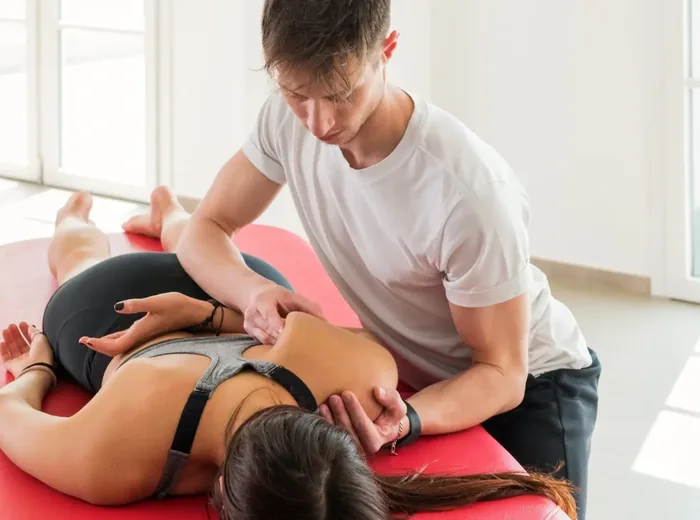
Hands-on work to restore motion where the joint or tissue has stopped moving well.

Chronic Pain
Pain that outlasted the injury. We change how the system responds, not just the tissue.

Myofascial Release
Sustained pressure through restricted fascia to give the tissue its glide back.
Ready when you are.
Fri: 7:00am - 3:40pm