Knee Pain Treatment in Swansea
Stairs going down, getting up from a low chair, the first few steps after sitting through a movie. Knee pain has a way of showing up in the ordinary parts of the day. In most cases the knee is caught between a hip and a foot that are not doing their share, and that is where we start looking.
What causes knee pain?
The knee is a hinge that sits between the two joints that steer it. The hip above controls where the thigh points, and the foot below controls how the shin lands. When either one stops doing its job, the knee absorbs the difference, which is why the knee that hurts is so often the knee that was compensating.
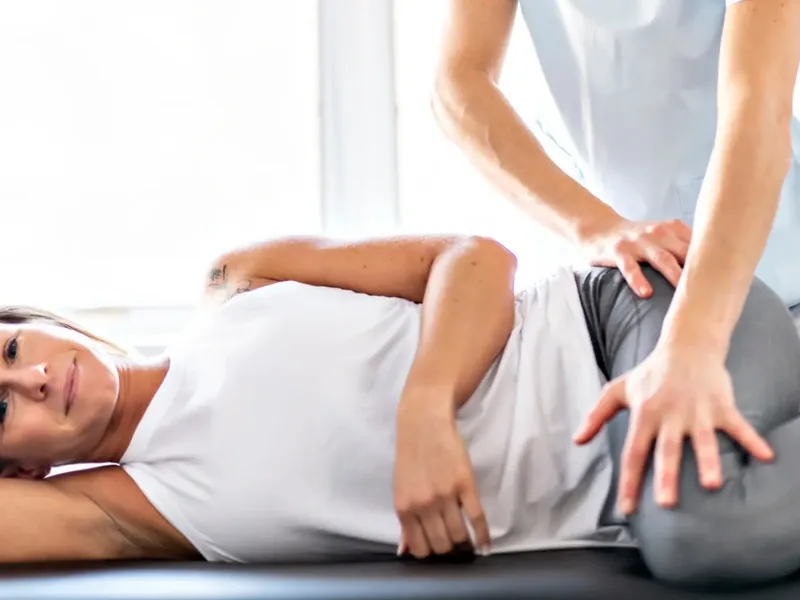
Pain around or behind the kneecap, worse on stairs, squats or after sitting, is usually a load problem rather than damage. Weak hip muscles let the thigh roll inward, and the kneecap stops gliding where it should. Strengthening the hip and the thigh changes how the kneecap tracks, which is what settles this kind of pain.
A twist, a pivot or a hit to the side of the knee can strain or tear a ligament. Some ligament injuries recover well with physical therapy alone, and some need surgery first. Either way, the knee needs its strength, balance and confidence rebuilt before it is ready for sport again. See our ACL tear page for more.
The meniscus is the cartilage cushion inside the knee. It can tear with a twist or wear down gradually over years, and it often shows up as pain along the joint line, swelling or catching. Many meniscus problems respond well to restoring motion and strengthening the muscles that protect the joint.
Wear in the knee cartilage is a real structural change, and physical therapy does not reverse it. What it does change is how much the knee limits you. Stronger muscles around a worn joint take load off it, and better motion means less of your day spent stiff. See arthritis.
The tendons above and below the kneecap carry a lot of force in jumping, running and stair climbing. Ramp the load up too quickly and they get irritable. The answer is rarely complete rest. It is a graded plan that brings the tendon back to the loads you need.
Whether it was a scope, a ligament repair or a total knee replacement, the surgery is only part of the recovery. Range of motion, strength and walking pattern all have to be rebuilt, step by step, so the new or repaired knee actually works the way you need it to.
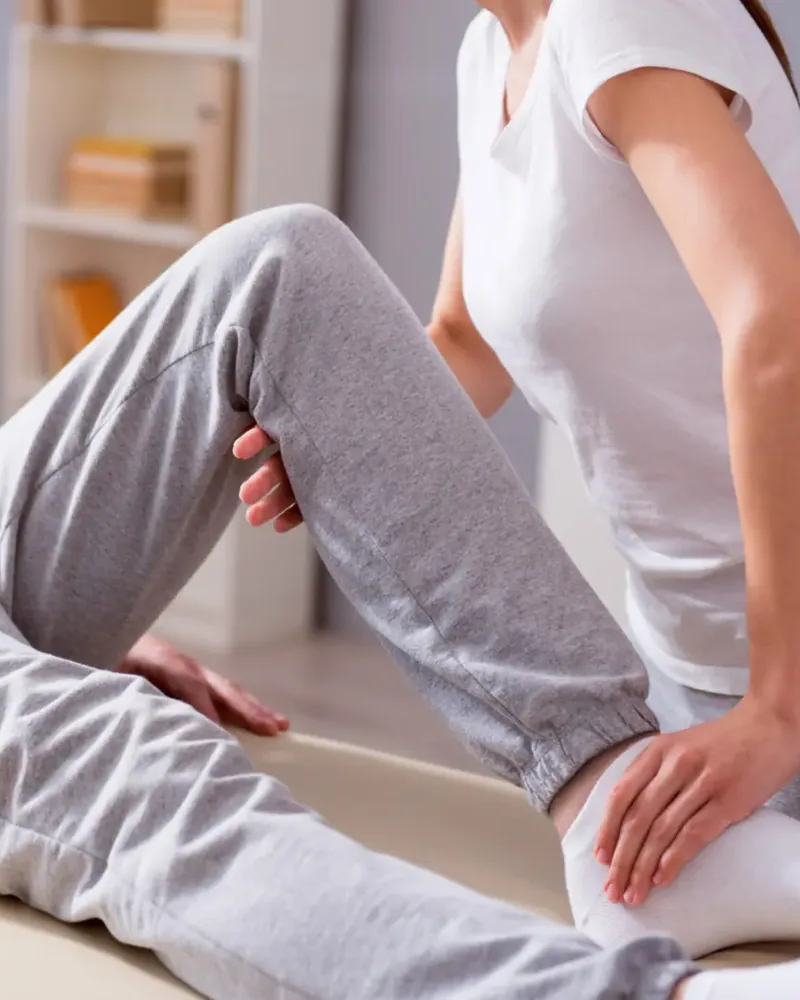
How physical therapy helps your knee.
The evaluation looks at the whole leg, not only the knee. We measure strength and motion on both sides, watch how the knee moves when you squat, step down and walk, and check what the hip and foot are doing while it happens. The Y Balance Test gives us a measured left-to-right comparison we can retest as you improve.
Treatment follows what the testing found. Manual therapy restores the motion the knee has lost and calms the tissue around it. Strength work goes after the muscles that control the knee, including the hip muscles that steer it. Then we rebuild how you walk, climb stairs, run or play, so the knee is ready for the things you came in wanting to do again.
What to expect from your recovery.
Evaluation
Most people are seen within 48 hours of calling. The first visit measures motion and strength in both legs, watches how your knee behaves when you load it, and checks the hip and foot above and below it. You leave knowing what is driving the pain and what the plan does about it.
Motion and relief
Hands-on work and targeted exercise get the knee bending and straightening comfortably again and settle the irritated tissue. Most patients come 2 to 3 times a week at this stage, and the everyday things like stairs and getting out of a chair are usually the first to improve.
Strength and return
Then we load the leg on purpose: the thigh, the hip and the balance between both sides. We retest, show you what changed, and work toward your goal, whether that is a long walk, a full workout or getting back on the field. We tell you when you no longer need us.
I went from having significant leg, knee and hip pain to being totally pain free and able to travel thousands of miles with no discomfort.
Pain rarely travels alone.
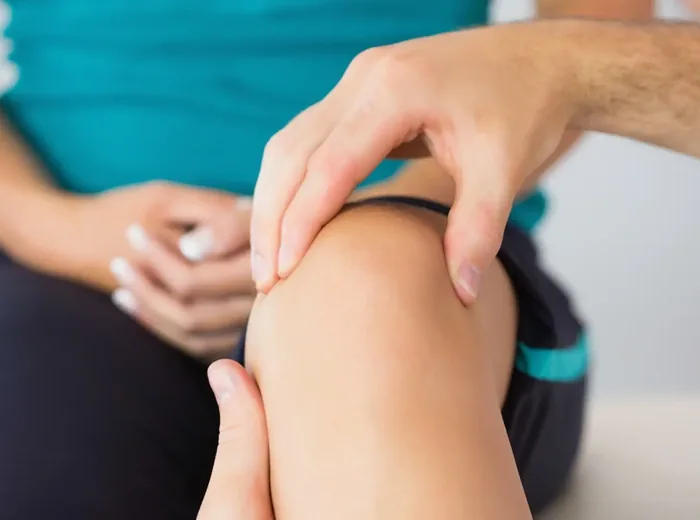
ACL Tear
Rehab before and after surgery, built around the strength and control your sport needs.
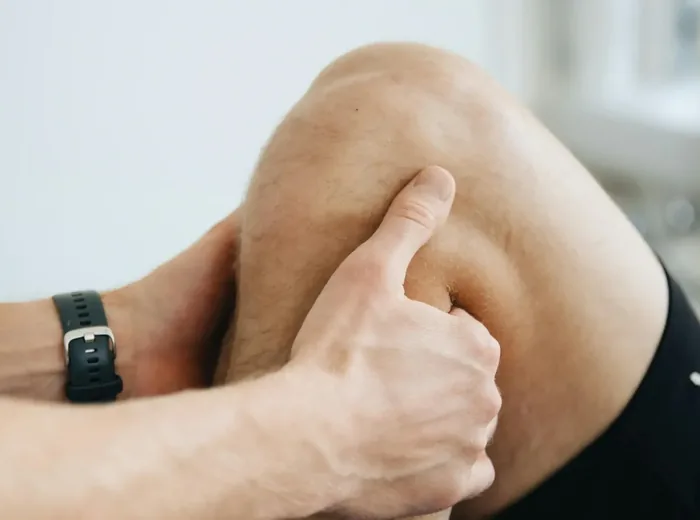
Total Knee Replacement Rehab
From your first days after surgery to the range and strength you actually need back.
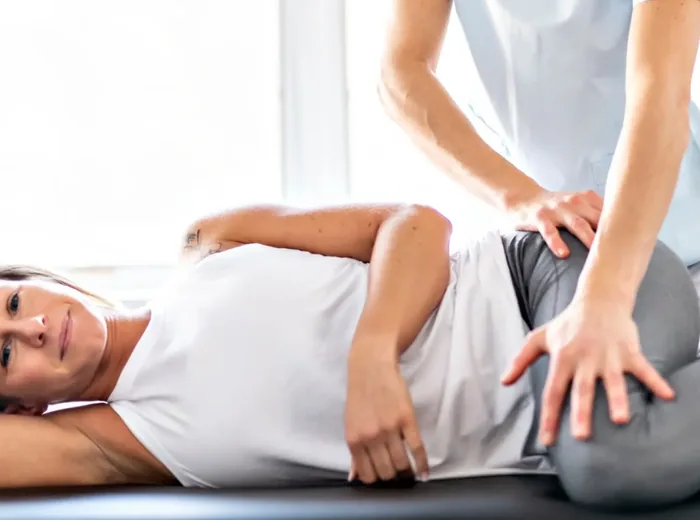
Hip & Knee Pain
When the hip and knee cover for each other, we treat the whole leg.
Ready when you are.
Fri: 7:00am - 3:40pm