Total Knee Replacement Rehab Treatment in Swansea
You have a new knee and a leg that does not feel like yours yet. The stiffness, the swelling and a quadriceps that will not switch on are not signs you are behind, they are exactly what rehab is built to work on.
What causes total knee replacement rehab?
A knee replacement changes the joint. It does not hand back the leg. The surgeon resurfaces the damaged surfaces, and everything the old knee taught your body comes with you into recovery: the range of motion you lost while you waited, the quadriceps that quietly stopped working, the limp you stopped noticing. Rehab is the part that turns a new joint into a leg you trust on stairs, and the earliest weeks carry more of that work than any other stretch of the process.
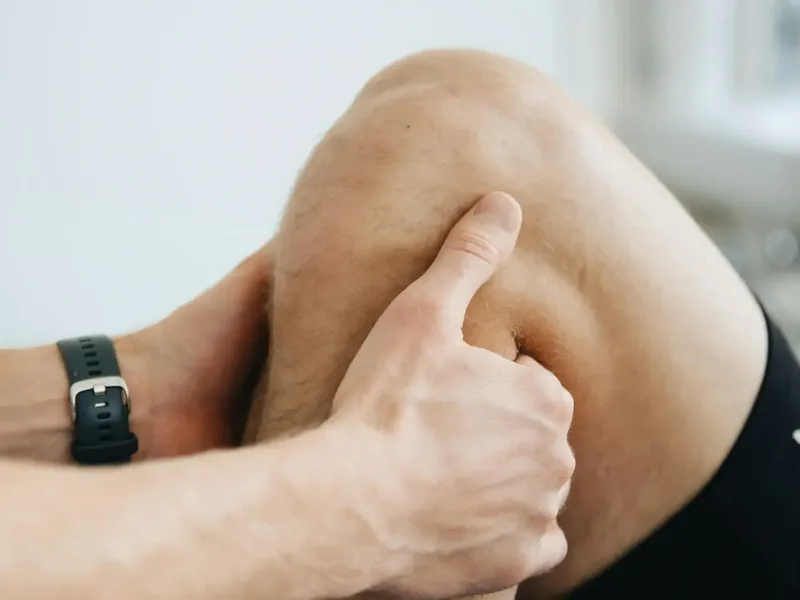
Surgery leaves the knee swollen, guarded and reluctant to move, and tissue that is not taken through its full range regularly tightens down around the new joint. Restoring the last few degrees of bend and of straightening is the most time-sensitive goal in the early phase, because stiffness that settles in becomes the limiting factor months later. We measure both directions every visit rather than estimating them.
The muscle on the front of the thigh often stops firing properly well before surgery, and it does not restart on its own afterwards. You feel it as a leg that gives slightly, a knee that will not lock out straight, or a thigh that looks visibly smaller than the other one. Getting that muscle to contract again is the foundation of everything else, because strength work does nothing if the muscle is not being recruited in the first place.
Swelling is not only uncomfortable. It mechanically blocks the knee from bending and it inhibits the muscles that cross the joint, so it holds back range of motion and strength at the same time. Managing it with positioning, graded movement and hands-on work is what makes the rest of a session productive instead of merely tolerable.
Long before the operation you learned to shorten your step, roll onto the outside of the foot, or swing the leg from the hip to keep weight off a painful knee. Those habits do not disappear when the joint is replaced, and they load the new knee unevenly. Gait training rebuilds a normal step so the knee, hip and ankle share the work the way they are supposed to.
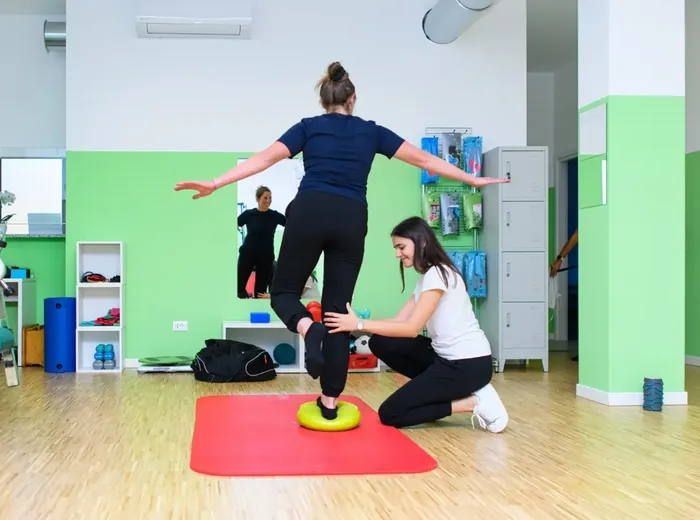
Months of guarding a painful joint, then surgery and reduced activity, blunt your sense of where the leg is in space. It shows up as hesitation on stairs, reaching for the counter when you turn, or losing confidence on uneven ground, and it raises fall risk at exactly the wrong time. Balance and coordination drills bring back the automatic control so the leg reacts without you having to think about it.
The hip and ankle on the surgical side have been picking up slack for a long time, and the other leg has been carrying more than its share. Poor mechanics anywhere in that chain still turn up as knee pain even after the joint itself is healthy. We assess the whole leg, because a well-built joint inside a poorly moving body still hurts.
How physical therapy in Swansea helps.
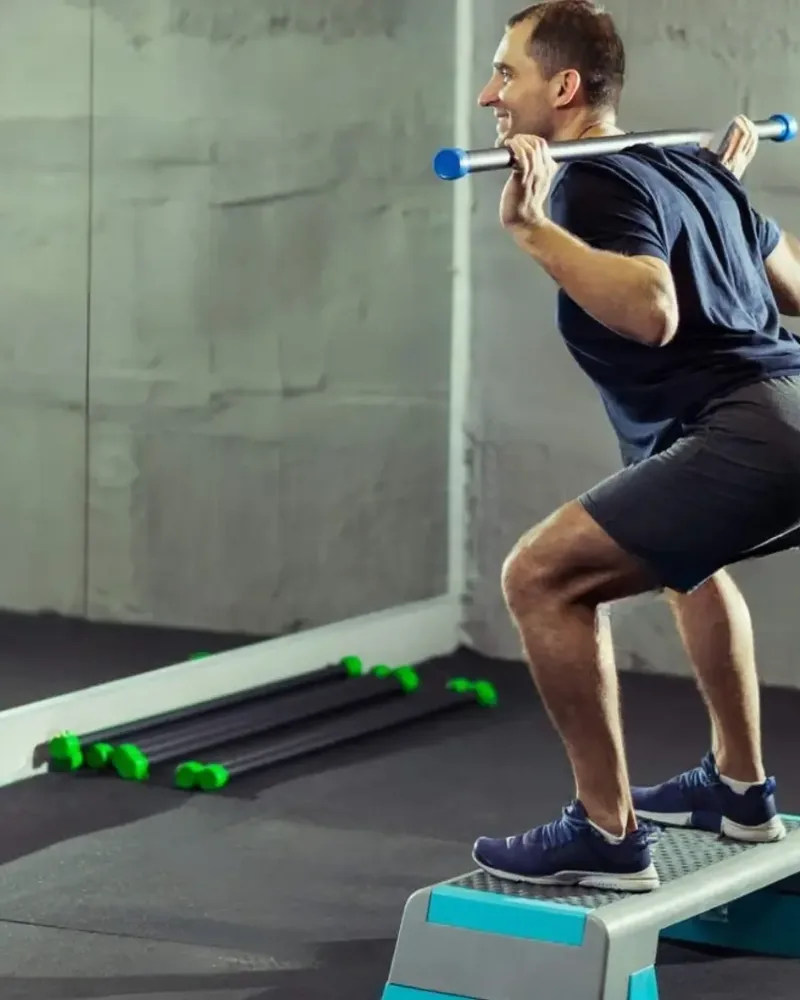
Post-surgical rehab is staged, not handed to you on a printout. Early on, Manual Therapy eases the stiffness building around the new joint, improves circulation through the area and helps the knee give up its last degrees of motion. Where the quadriceps has shut down and will not answer effort alone, NEUBIE E-Stim delivers a direct signal to the muscle so you can train a contraction you cannot yet produce by yourself. From there it becomes strength work, gait retraining and balance drills, progressed as the knee earns each step rather than on a calendar. Every session is 40 minutes, one-on-one with a licensed physical therapist, at our Swansea office or in Providence, and most people come 2 to 3 times a week while the knee is changing quickly. Two of our clinicians are board-certified orthopaedic clinical specialists, and post-surgical knees are core work here. Between visits a home program holds onto what you gained, and your plan is adjusted every time your measurements move.
What to expect from your recovery.
Evaluation and early motion
Your first visit measures where the knee actually is: how far it bends and straightens, how much swelling is present, whether the quadriceps fires, and how you are walking. Outpatient therapy usually begins as soon as your surgeon clears it. Early sessions protect the surgical site while pushing range of motion and quadriceps activation, because those two set the ceiling for everything that follows.
Strength, gait and balance
Once the knee moves and the muscle responds, the work turns to load. We build the quadriceps, glutes and calf through progressive resistance, retrain a normal walking pattern, and add balance and coordination drills so the leg holds you up on stairs and uneven ground. As your control improves, walking aids come out of the picture on your terms rather than on a schedule.
Back to your own life, then off our schedule
The last stage is specific to you: the stairs at home, getting in and out of the car, a full day on your feet, the garden, the golf swing. We keep testing instead of guessing, adjust as strength returns, and hand you a maintenance program for long-term strength and flexibility. When the knee is doing what you need it to do, we say so plainly and let you go.
I had 2 Total Knee Replacements in 3 years. I would highly recommend Specht PT if you’re looking for the Best. The first surgery went fine. My second one was worse, and Greg worked my knee and identified my problem and contacted my doctor.
Pain rarely travels alone.
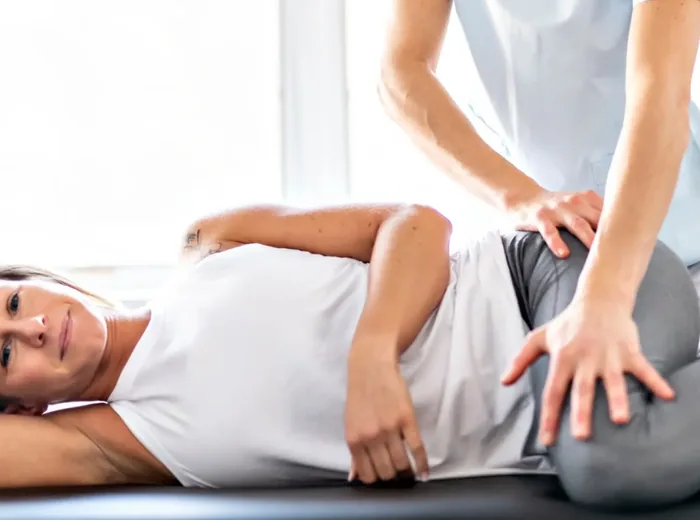
Hip & Knee Pain
Stairs, walking, stiffness that disrupts sleep. We restore the mechanics before we load them.
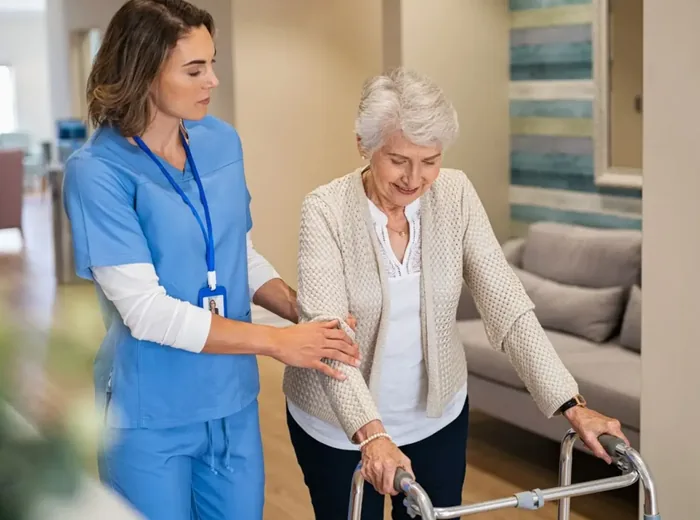
Arthritis
Keep the joint moving and the muscle around it strong. Motion is what makes it tolerable.
Balance & Gait Disorders
Unsteadiness, near-falls, a walking pattern that changed. Retrain it before it costs you.
Ready when you are.
Fri: 7:00am - 3:40pm