Sports Injury Rehab
You already know what is injured. What nobody has told you is whether going back next month puts you right back here. That is the question a proper evaluation answers, and it is the one that decides your season.
What causes sports injuries?
Sports injuries fall into two families. There is the one that happens in a single frame, a cut, a landing, a collision, and there is the one that builds quietly over weeks until a tendon finally refuses. Contact sports like football, rugby, and hockey produce more of the first. Endurance sports like running and swimming produce more of the second. The injury itself tells us what to rehabilitate. How it happened tells us what has to change so you are not back here next season.
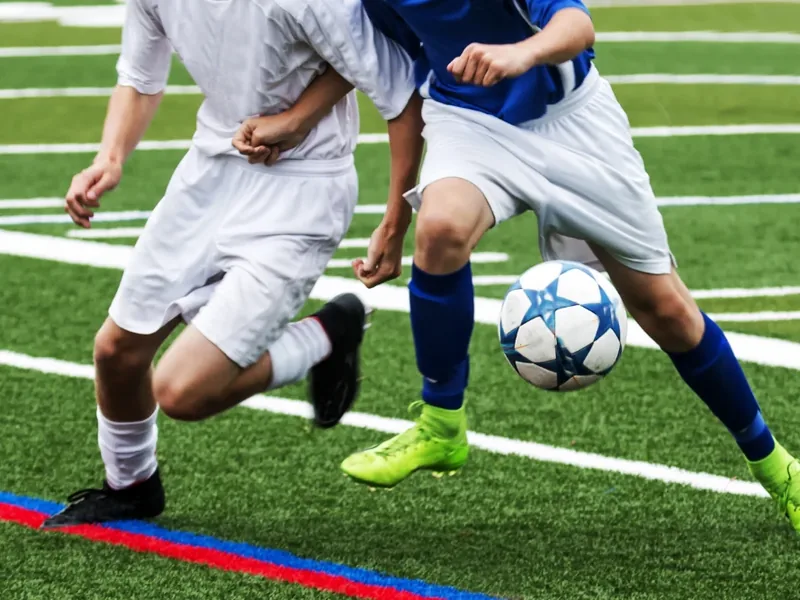
Most ankle sprains come from a sudden change of direction or an unstable landing that rolls the joint past what the ligaments can hold. The pain fades a long time before the instability does, which is why a poorly rehabilitated ankle keeps rolling for years afterward. Joint mobilization, balance training, and progressive strengthening rebuild the stability that the ligaments alone will not hand back.
Hamstrings tear during explosive sprinting or when the muscle is stretched under load, usually at the moment the leg is decelerating. Pain and lost range arrive immediately, and the muscle stays vulnerable until strength returns at long lengths, not just in the comfortable middle of the range. Deep soft tissue work plus progressive loading through full range is what lowers the reinjury rate.
A hard collision or a forceful overhead movement can drive the shoulder out of the socket, stretching the structures that were holding it in place. After the first one the joint sits looser than it did, so it can slip again with far less force. Controlled strengthening, neuromuscular retraining, and restored mobility give the muscles the job the ligaments can no longer do alone.
Sudden pivots, hard landings, and direct trauma tear the ACL, MCL, PCL, or LCL and take the knee's passive stability with them. Whether or not surgery is part of the picture, the knee has to relearn how to accept load in the exact positions that injured it. Movement pattern retraining, controlled resistance work, and agility drills rebuild that, and the order matters.
Tissue gets stronger by being stressed and then allowed to recover. When volume, intensity, or frequency climbs faster than recovery, that same tissue breaks down instead of adapting, and tendons are usually first to complain. Rest alone is not the answer, because rest also lowers capacity. The answer is loading the tissue deliberately while the schedule around it changes.
Two athletes can run the same mileage and only one breaks down, because the load lands differently. Weak hips send the knee inward on every stride. A stiff ankle pushes the work further up the chain. Racquet and throwing sports build asymmetry by design. Finding those patterns is why the same injury keeps returning in the same athlete.
How physical therapy helps.
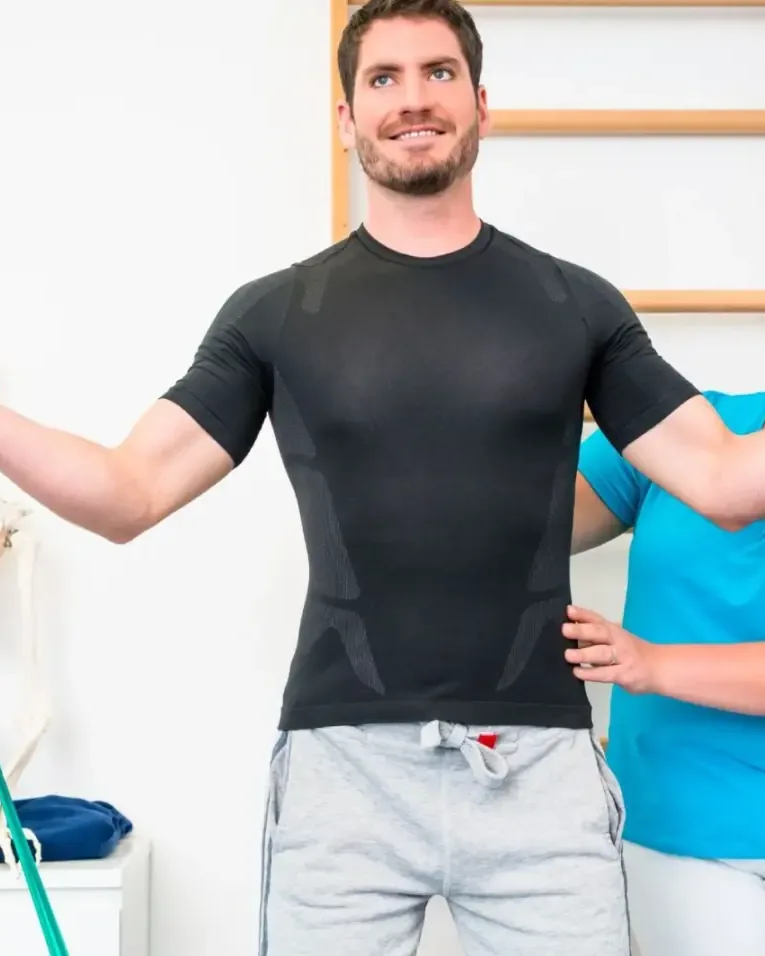
What we build here is centred on the return-to-sport decision, because that is the part athletes get wrong on their own. Our licensed physical therapists use Functional Movement Screening (FMS) to identify movement limitations, not to predict which injury you will get, and the Y Balance Test to measure single-leg control and how far apart your two sides really are. Those results feed Move 2 Perform, a risk-scoring assessment that sorts you into one of four categories from optimal to substantial deficit, so readiness stops being a feeling and becomes something you can see on a page. Sports Rehab then carries the programming phase by phase until the drills look like your sport again. Dr. Greg Specht, PT, DPT, OCS completed a Sports Medicine Fellowship at the American Sports Medicine Institute in 1993, and Dr. Zach Pereira is an NSCA-certified CSCS, a MoveNat instructor, and a former collegiate soccer player, so the conversation about your sport tends to be a short one.
Timelines depend on the tissue and the sport, not on how motivated you are. Ligament and tendon healing sets a floor no program can shortcut, and you will get an honest estimate at the evaluation rather than a number chosen because it sounds encouraging. Most athletes train with us 2 to 3 times a week, in Swansea or at our Providence office, and advance by meeting criteria instead of by hitting dates on a calendar. If your injury needs imaging or a surgical opinion before rehabilitation makes sense, we will tell you that on day one and help you get it.
What to expect from your recovery.
Injury and athlete assessment
We examine the injured tissue, then we look at the athlete around it: how you move, where you are strong, and which side has been doing the extra work. Screening and single-leg testing give us a baseline number to beat. You leave with a plan and an honest read on the road ahead.
Restore, then load
We settle pain and swelling and get range of motion back, then start loading the injured tissue on purpose, because tissue only rebuilds when it is challenged. Progress is measured against your own baseline rather than against how the other side felt last month.
Return to sport on criteria
Sport-specific drills, agility, and power come last, and retesting decides when you advance. When your scores clear and the movements look like your sport again, you go back. If they do not clear, we say so, even when that is not what you want to hear.
Talented and dedicated group of physical therapists! Jesse gave me great recommendations to keep my machine operating!
Pain rarely travels alone.
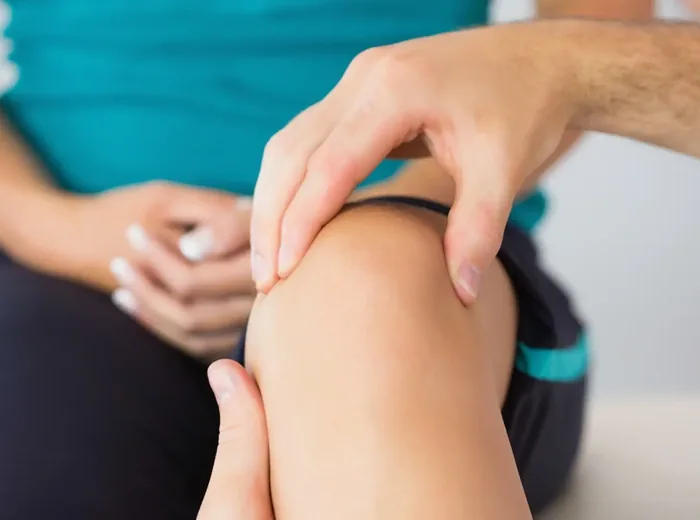
ACL Tear
Rebuild strength and stability after an ACL injury, and return to sport tested, not guessed.
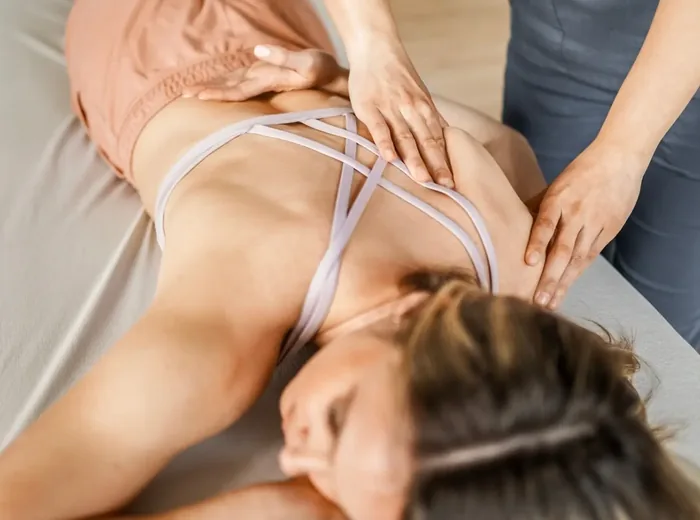
Rotator Cuff Tears
Pain worse at night, weakness when you lift. A graded plan, with or without surgery.
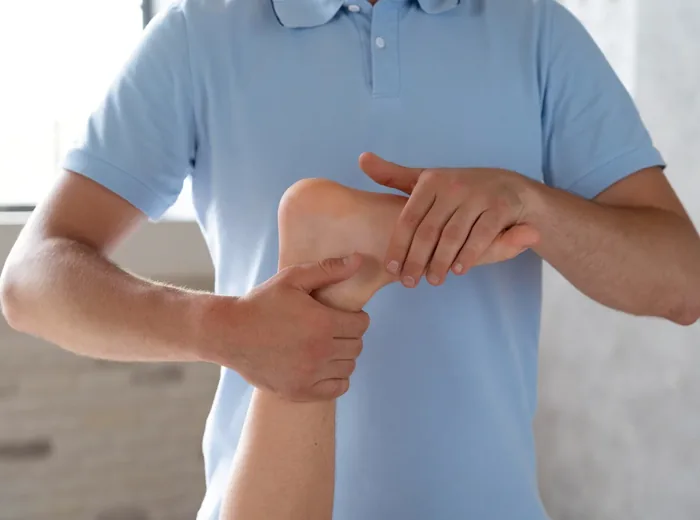
Foot or Ankle Pain
Plantar pain, sprains that keep coming back, and the gait pattern underneath them.
Ready when you are.
Fri: 7:00am - 3:40pm