ACL Tear Rehab in Swansea
You heard it go, the knee swelled, and now everybody has an opinion about surgery. What you want to know is whether the knee comes back, and what the work between here and there actually involves.
What causes ACL tears?
An ACL tear takes about a second, and most of them happen without anyone touching you. The ligament is the knee's brake against twisting and shearing, so it fails when the leg is asked to do something the muscles around it cannot control in time. That matters for rehab, because the things that put the knee in that position are trainable. Knowing which of them applies to you is how we decide what your plan looks like, whether or not you have surgery.
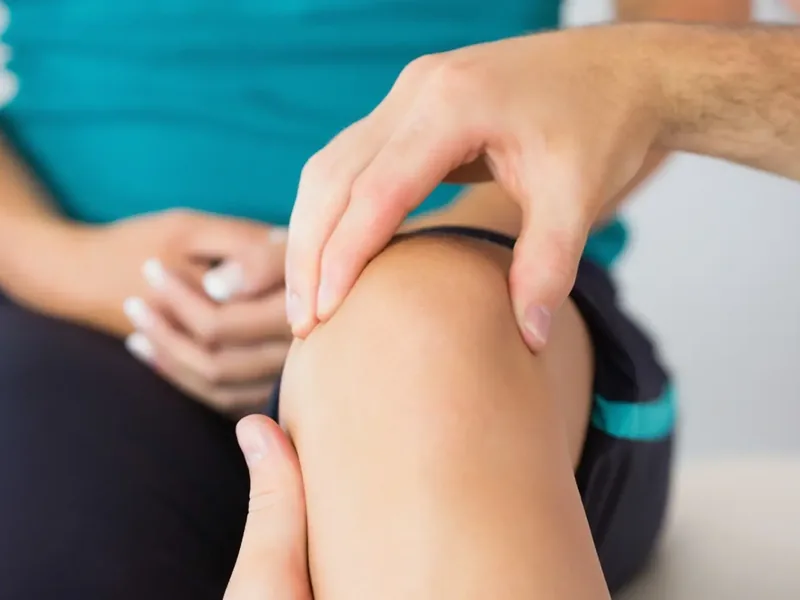
Planting the foot and turning through it drives a rotational force through the knee, and the ACL is the main structure resisting it. When the turn happens faster than the hip and thigh muscles can control, the ligament takes that load on its own. It is also why instability after an ACL injury shows up first with pivoting rather than with straight-line walking.
Coming to a sudden stop asks the quadriceps and the ACL to slow the shin's forward slide together. If the muscle is late, weak or fatigued, more of that braking load lands on the ligament instead. Sudden stops stay one of the clearest tests of whether a knee is genuinely ready to go back to sport.
Side-to-side movement and landings load the knee across its axis rather than straight through it, which is the direction it defends least well. A landing where the knee drifts inward, or a change of direction taken on one leg, puts the joint exactly where it is most exposed. Retraining how you land and cut is a large part of why rehab lowers the chance of a second injury.
ACL injuries cluster in high-impact sport and in active people who train hard, because those are the people repeatedly asking the knee for fast pivots, jumps and contact. Volume matters as much as any single moment, since a fatigued knee controls those forces worse than a fresh one. Training load is one of the first things we look at, both in how the injury happened and in how you come back.
An ACL problem left alone does not always stop you walking. Plenty of people walk and even jog on a torn ACL, but the knee gives way with changes of direction, swells after activity, and slowly loses thigh muscle because you stop trusting it. That combination of instability and avoidance is exactly what a non-surgical plan has to address.
Some knees arrive here after a reconstruction that failed, or after an earlier surgery whose rehab stopped as soon as the pain did. Lingering swelling, a thigh that never rebuilt and a knee that still feels unreliable all point to a recovery that was cut short rather than finished. Revision cases and unfinished rehab need the same thing: an honest, measured account of what the knee can do right now.
How physical therapy in Swansea helps.
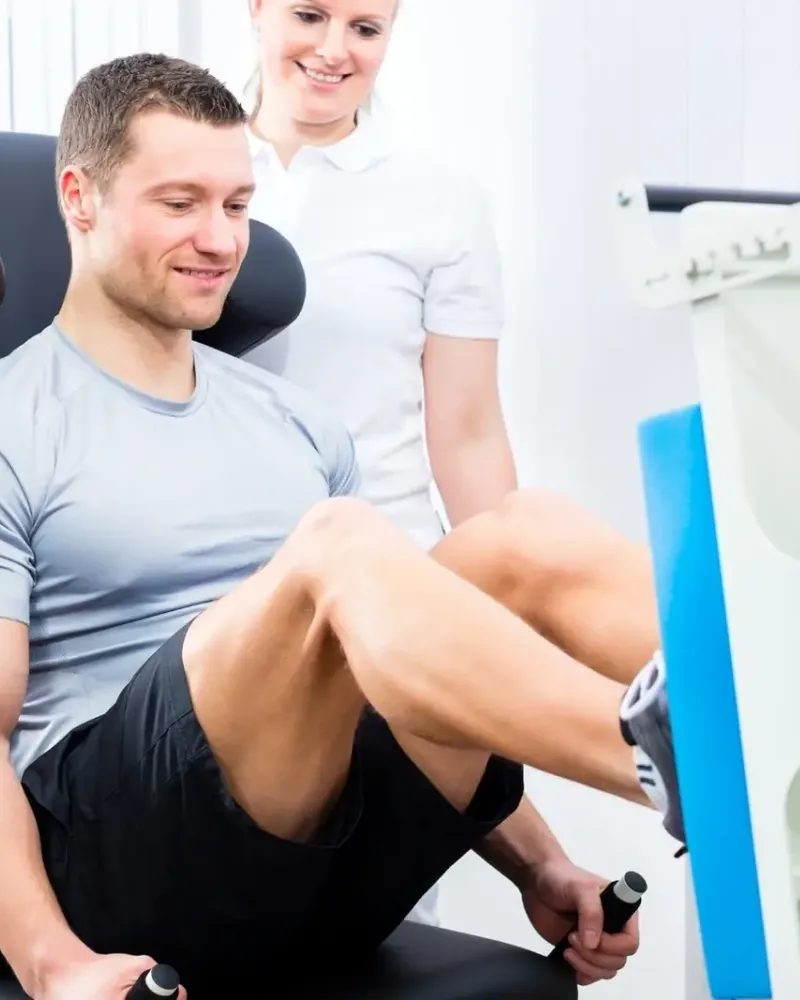
There are two roads out of an ACL tear and both of them run through rehab. If you are having surgery, the work starts before it: settling swelling, getting the knee fully straight and waking the quadriceps so you go in with a leg that works. Afterwards we follow your surgeon's protocol and add the parts that decide how the knee performs later, which are strength and neuromuscular re-education, the retraining of the reflexes that stabilize the joint before you have time to think. If you are going the non-surgical route the substance is the same: build the muscle that has to do the ligament's job, then prove the knee can handle rotation. Either way, clearance is a measurement rather than a feeling. The Y Balance Test scores how far you can control your body on one leg and compares one side against the other. Move 2 Perform takes that result alongside your Functional Movement Screen and sorts it into a risk category, which tells us where movement limitations remain, not how likely you are to get hurt. Sports Rehab is where the last phase lives: agility, plyometrics and the specific demands of your sport. We do this in Swansea and in Providence, 40 minutes at a time, one therapist to one patient.
What to expect from your recovery.
Know exactly what the knee is doing
The first visit is a full account of the knee: swelling, range of motion, ligament stability, thigh strength and how you move. We review the imaging and reports you already have, and build the rest of the picture with functional and biomechanical testing rather than inferring it from the story of the injury. You leave knowing which track you are on and what the milestones are.
Rebuild the knee in order
Motion and swelling first, then strength through the quadriceps, glutes and hamstrings, then the balance and reaction work that makes the joint stable without conscious effort. Every phase has criteria to meet before the next one opens, so progression is earned rather than scheduled. Post-surgical knees follow your surgeon's protocol layered on top of that.
Return, then stay returned
Before you go back to full activity we test it: single-leg control, strength symmetry side to side, and the movements your sport genuinely demands. If you are managing the knee without surgery we keep monitoring it, because a knee that is stable in March is not automatically stable in September. Periodic check-ins are how strength and control stop quietly drifting.
High quality care. The level of personal attention I received there was exceptional.
Pain rarely travels alone.
Sports Injuries
Return-to-play built around your sport, your position and your actual timeline.
Hip & Knee Pain
Stairs, walking, stiffness that disrupts sleep. We restore the mechanics before we load them.
Total Knee Replacement Rehab
From your first days after surgery to the range and strength you actually need back.
Ready when you are.
Fri: 7:00am - 3:40pm