Move 2 Perform in Swansea, MA
You are out of pain and you feel ready to go. The question your season actually turns on is whether anyone has measured that readiness or simply agreed with it.
What is Move 2 Perform?
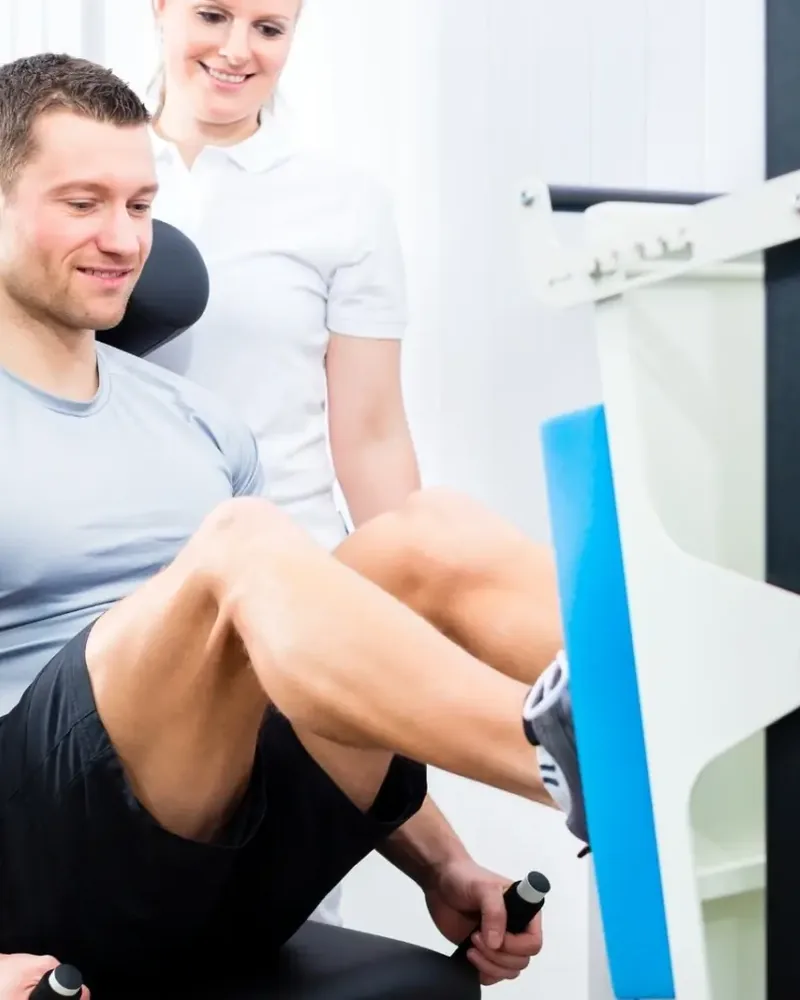
Move 2 Perform is not a program and it is not ours. It is third party software we use here: an algorithm that takes objective test results and sorts a person into a risk category. The inputs are the two assessments on either side of this page. Your Functional Movement Screening scores go in, your Y Balance Test reach numbers go in, and so do your age, your sex, your sport and your level of competition, so the comparison is against athletes who look like you on paper rather than against a general average. Its founding assumption is that injury risk is multifactorial. One moderate finding on its own may mean very little, while three modest findings stacked in the same athlete is a different picture entirely, and a single average score would bury that. What comes back is one of four categories: Optimal, Slight Deficit, Moderate Deficit, or Substantial Deficit.
Here is what each one changes about your plan. Optimal means the testing did not find a meaningful deficit, so we keep you training and retest at the points in your season where load changes. Slight Deficit usually means one finding worth attention, so specific corrective work gets added to what you are already doing and then measured again. Moderate Deficit means either one significant limitation or several smaller ones together, so correction comes before unrestricted return and load is added in stages. Substantial Deficit means the findings are broad enough that clearing you right now would be a decision made without support, so we build the corrective program first and retest before that conversation happens. In every case the category informs the decision and does not make it. Risk is never zero, and the person walking you through the report is the licensed physical therapist who tested you, in Swansea or in Providence, not the software.
Who it's for.
This is for the moment when a decision has to be made and everyone in the room is guessing. Scoring is only worth doing when something real hangs on the answer.
Pain free, and the call is somebody's opinion
You finished rehab and nothing hurts. Being out of pain and being ready to cut, land and sprint are two different states, and re injury risk does not disappear the day symptoms do. This puts a measurement underneath the decision.
Healthy, and screening anyway
Nothing is wrong and you want to know where you stand. The report tells you whether your movement patterns sit below, level with, or above athletes of your own age, sex, sport and competitive level, which is far more useful than a bare score.
A team with less time than athletes
Coaches and trainers rarely have the hours to give every athlete extra work. Sorting a roster into categories shows who should get the limited prevention time and who can carry on training exactly as they are.
What to expect from your assessment.
Nothing here is done to you. It is testing, then a few minutes of data entry, then a conversation in front of the result. The scoring is the quick part, because the honest work sits in the two tests that feed it.
The two tests first
You go through the seven Functional Movement Screening patterns and then the Y Balance reaches on both legs. That is the appointment. If something currently hurts, we evaluate it with the Selective Functional Movement Assessment first, because scoring a painful pattern tells you very little.
Your profile goes in with the scores
Age, sex, sport and competitive level are entered alongside your results, because a reach difference means one thing in a high school swimmer and something else in a college defensive back. Peer comparison is the point.
Your category, explained
We read the output with you: which of the four categories you landed in, which specific findings put you there, and which single result would move you into the next one. No jargon, and no hiding behind the algorithm.
The plan and the retest
Corrective work is tied to the exact items that scored poorly, not to a generic list. Then we retest with the same tools, which is what makes return to sport, return to activity and discharge decisions comparable over time.
A risk category is a decision aid. It is not a diagnosis and it is not a clearance. It cannot see your training history, your sleep, or a bad landing next Saturday, so read it as one strong input into a decision your therapist makes with you.
Where to go next.

Selective Functional Movement Assessment
The evaluation we build every plan on. It finds the cause, which is rarely where it hurts.

Sports Rehab
Rehab that ends where your sport begins, with the loads and speeds it demands.
Sports Injuries
Return-to-play built around your sport, your position and your actual timeline.
Ready when you are.
Fri: 7:00am - 3:40pm