Hip & Knee Pain Treatment
Stairs, the first block of a walk, getting out of the car: the joint warms up and then complains anyway. When you have started planning your day around a hip or a knee, the problem is rarely confined to the part that hurts.
What causes hip and knee pain?
Your hips and knees absorb impact every time your foot hits the ground, and they only manage it when strength and balance are shared between them. The knee especially sits between the hip above and the foot below, with very little say in how either behaves. That is why the joint that hurts is so often the joint that was compensating, not the joint that failed.
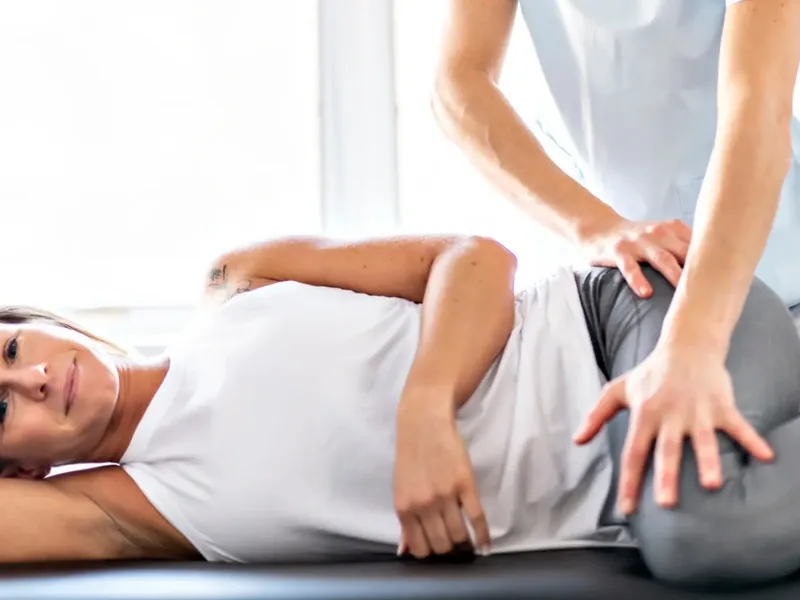
Muscle weakness on one side and tightness on the other pull a joint out of the line it was built to work in, and the surfaces inside it stop sharing load evenly. Even a small difference in leg length raises the stress travelling through the knees and the pelvis with every step. Restoring the balance of strength and length around the joint changes where that load lands, which is usually what the joint was complaining about.
Running, jumping, and heavy lifting all wear on the tissues that protect the joint, and those tissues rebuild themselves during recovery rather than during the activity. Take the recovery away, by training too often or working a job that never lets up, and strain accumulates instead of clearing. The pain that follows is not a sign you are fragile. It is a load-and-recovery arithmetic problem that can be fixed.
Years of movement gradually wear away the cushioning inside a joint, and bone spurs or changes in the ligaments restrict how far it will travel. That is a real structural change, and physical therapy does not reverse it. What it does change is how much that joint limits you: strong muscles around a worn joint control load better, and better motion means less of your day spent stiff.
The hip and the knee share muscles and nerve supply, so when one is weak or stiff the other quietly takes over the work. That substitution is efficient in the short term and expensive over months, because the joint doing the extra work is the one that eventually hurts. This is why we assess the whole leg: treating only the painful joint leaves the arrangement that created it fully intact.
The sciatic nerve runs from your lower spine, through the hip, and down the back of the leg. Joint dysfunction or tight muscles along that route can compress it, and the pain then travels rather than staying in the hip. Hands-on work aimed at the tissue actually holding the pressure is what settles that pattern, and it looks nothing like treatment for a worn joint surface.
When a joint hurts you shift weight off it without deciding to, and that pattern often stays long after the original problem settles. Weeks of walking that way overloads the other leg and leaves the injured side weaker still. Worth knowing: swelling or restricted movement after a fall should be evaluated before you start pushing through it, so nothing serious is missed.
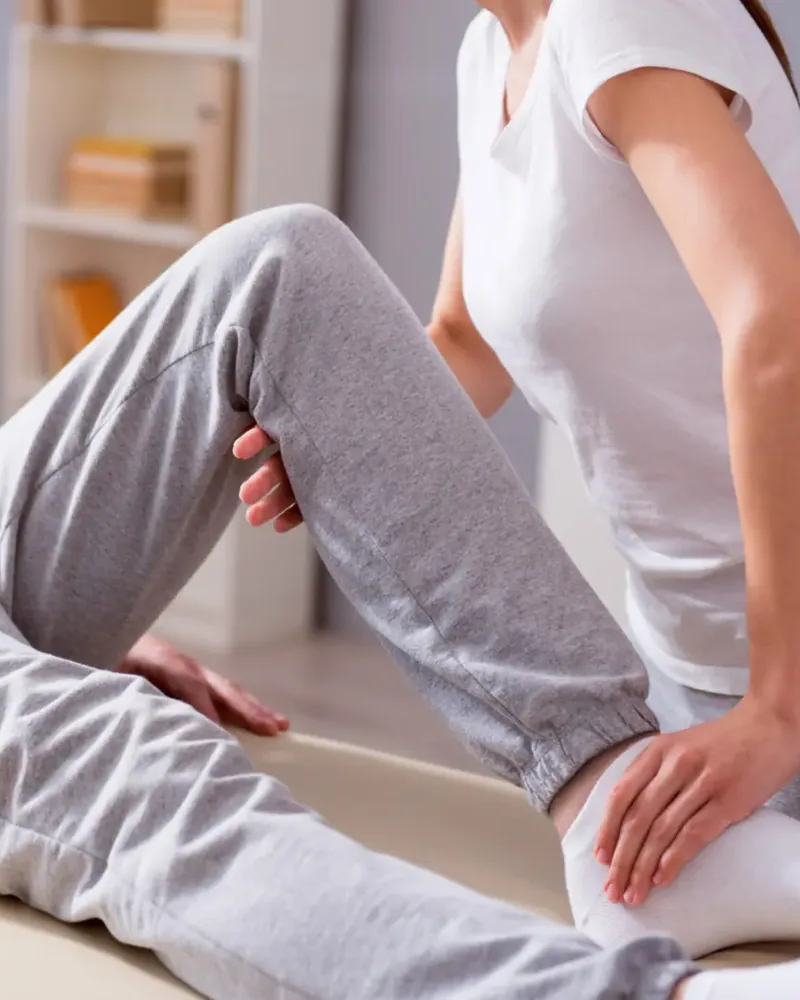
How physical therapy helps.
The evaluation covers the whole leg, not only the joint that hurts. We test strength on both sides, check how each joint moves, watch how you load the leg, and look at how you walk. The Y Balance Test gives us a measured comparison between your left and right, which turns a vague sense that one leg feels weaker into a number we can retest in a few weeks. For anyone heading back to running, lifting, or sport, Move 2 Perform takes those results and the movement screen and sorts them into a risk category, which tells us how much load your leg is genuinely ready for right now.
Treatment follows what the testing found. Manual therapy and joint mobilization restore the motion the joint has lost, with targeted pressure on the tissue holding a pain pattern that travels down the leg. Strength work then goes after the muscles that actually control your hip and knee, and gait retraining rebuilds a walking pattern that stopped being normal while you were guarding. You leave with warm-ups, mobility drills, and a joint-loading plan you can keep using. Every session runs 40 minutes, one on one with a licensed physical therapist, in Swansea or at our Providence office, and two of our clinicians are board-certified orthopaedic clinical specialists.
What to expect from your recovery.
Evaluation
Most people are seen within 48 hours of calling. The first visit measures strength, joint motion, and balance on both legs, watches how your knee and hip behave when you load them, and looks at your walking pattern. You leave knowing which joint is the problem, which one has been covering, and what the plan does about each.
Motion and relief
Hands-on work releases the tissue restricting the hip, knee, and ankle and gets the joints gliding through their available range again. When symptoms are travelling down the leg, the pressure gets addressed where it is actually being held. Most patients come 2 to 3 times a week at this stage, which is when walking starts feeling less like a decision.
Strength and gait
Then we load the leg deliberately: the glutes and hip stabilizers, the muscles supporting the knee, and the balance between the two sides that the testing showed. Gait retraining puts that strength into how you actually walk, run, and climb stairs. We retest, we tell you what changed, and we tell you when you no longer need us.
I went from having significant leg, knee and hip pain to being totally pain free and able to travel thousands of miles with no discomfort.
Pain rarely travels alone.

Arthritis
Keep the joint moving and the muscle around it strong. Motion is what makes it tolerable.
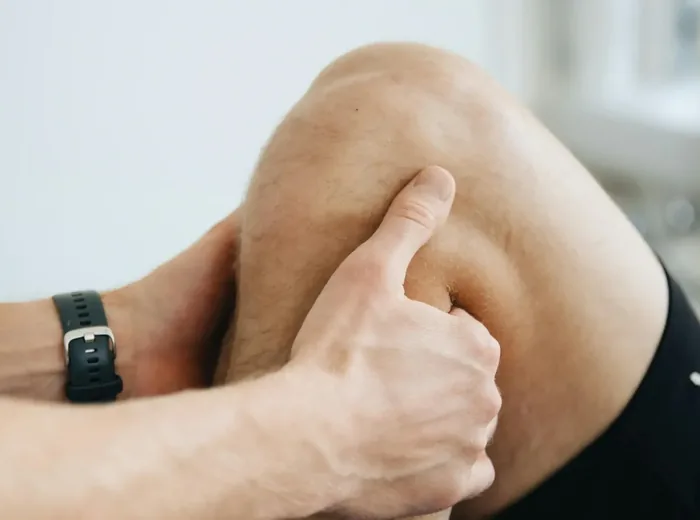
Total Knee Replacement Rehab
From your first days after surgery to the range and strength you actually need back.
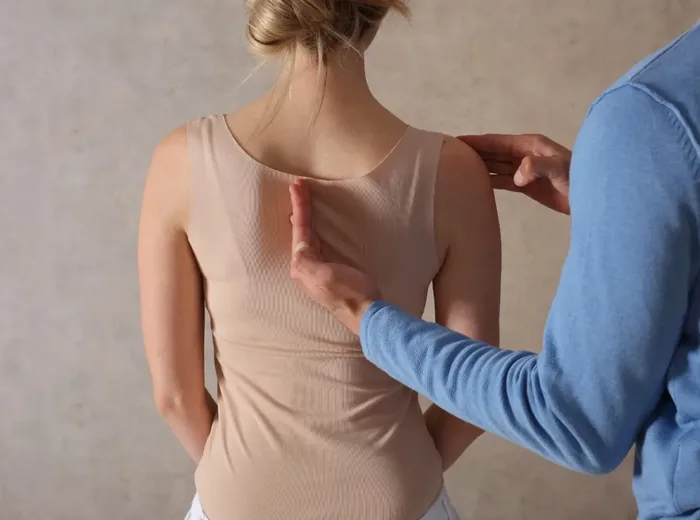
Back Pain & Sciatica
The reason most people walk through our door. We find what is driving it, not just where it hurts.
Ready when you are.
Fri: 7:00am - 3:40pm