Arthritis Treatment
The knee that stiffens after sitting too long, the neck that will not turn as far as it used to, a grocery run that takes more out of you than it should. You have probably been told it is just age and to take it easy, and taking it easy has not made it better.
What causes arthritis?
Arthritis is a family of conditions rather than one diagnosis, and they do not all behave the same way. Some are wear in a joint that has carried load for decades. Others are driven by an immune system attacking joint tissue, and those need medical management alongside anything we do. What they share is a cycle: pain leads to less movement, less movement leads to weaker muscles, and weaker muscles put more load on the joint that already hurts. That cycle is the part physical therapy can change, which is why the type you have decides what your plan looks like.

This is the common one. The cartilage that cushions a joint gradually thins, and the joint becomes painful, stiff and less willing to move through its full range. Knees, hips, hands and the spine are the usual sites, and stiffness after rest with more pain later in the day is the typical pattern. The muscles around the joint carry a real share of every step, so strengthening them lowers how much load the joint absorbs.
Rheumatoid arthritis is an autoimmune condition in which the immune system drives chronic inflammation in the joint lining, often symmetrically and often in the hands and wrists. The disease itself is managed medically by your physician or rheumatologist, and that comes first. Our part is what happens around it: keeping range of motion, maintaining strength through the joints involved, and adjusting activity through flares so you lose as little function as possible.
Psoriatic arthritis is associated with psoriasis and produces painful, swollen joints, sometimes in the fingers and toes and sometimes in the spine. The skin side of it and the condition itself belong to your physician. We work on joint mobility, strength and the movement patterns that keep daily activity manageable when specific joints are sore.
Joints tolerate load well. They tolerate the same load, in the same part of the joint, all day, far less well. Years of a posture that tips weight onto one side, or a work motion repeated for a decade, concentrate stress in one region instead of spreading it. That is why arthritis often turns up in one knee and not both, and why changing posture and mechanics is one of the few things that alters the actual demand on the joint.
A fracture, a bad sprain or a ligament tear that healed but never got its strength and movement back leaves the joint working with less support than it had before. Years later, that is often the joint that becomes arthritic and painful. Rebuilding what the original injury took is still worth doing long after the fact.
When a joint hurts you move it less, and you move differently, so the muscles supporting it weaken while neighboring joints stiffen. Mobility and gait testing shows where that has happened, and the pattern is usually clearer than people expect. Reversing the disuse side of the problem is where most of the day-to-day improvement comes from.
How physical therapy helps.
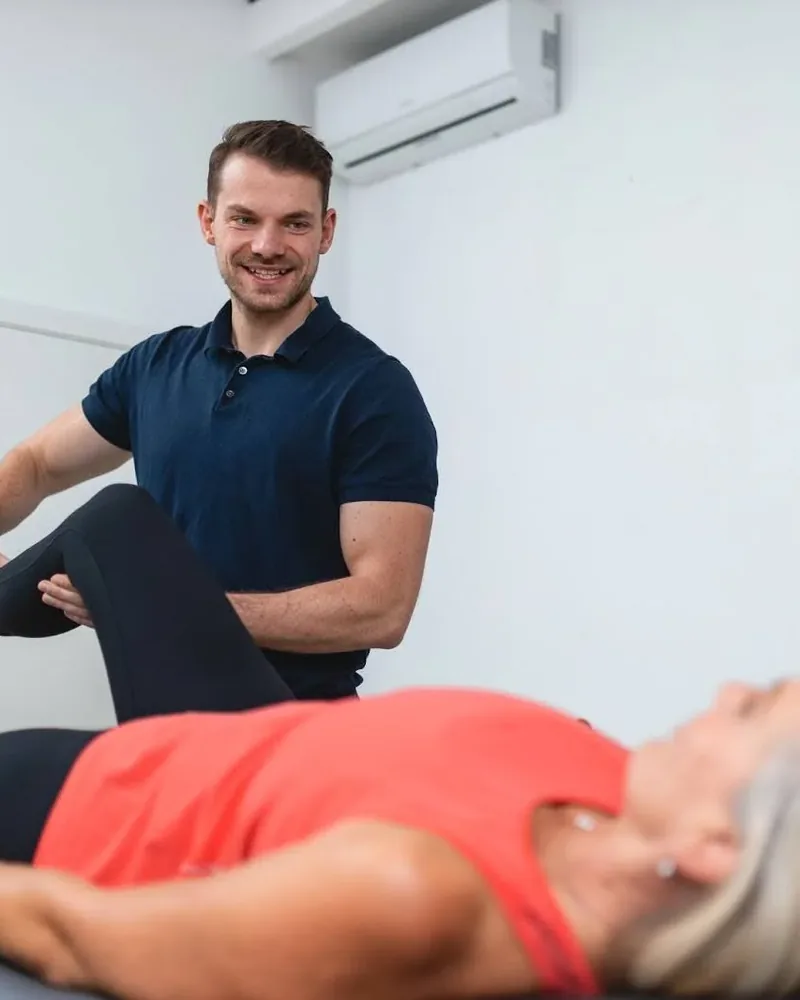
Arthritis care is load management, not rest. The joint has less tolerance than it used to, so the work runs in two directions at once: raise what it can handle, and lower what you ask of it in the meantime. Manual Therapy loosens the joint and the tissue around it so there is movement available before we try to strengthen anything, and Massage Therapy helps with the muscle tension and guarding that builds around a joint that has hurt for a long time. Where the problem is not local we use the Selective Functional Movement Assessment to find which restriction elsewhere is loading the painful joint, because a stiff hip regularly presents as a sore knee. Then comes the part that does the most: graded strengthening of the muscles supporting the affected joints, dosed to work within your pain rather than through it, plus postural work so the joint is not fighting your alignment all day long. Physical Therapy here is unhurried: 40 minutes one-on-one, in Swansea or Providence, with two board-certified orthopaedic clinical specialists on staff and a plan that flexes as your joints have better and worse weeks. Nobody is going to tell you arthritis goes away. What changes is how much of your day it gets to decide.
What to expect from your recovery.
Evaluation
We work out which joints are involved, what movements provoke them, where range of motion has gone and where strength is missing, using posture and movement analysis alongside mobility and gait testing. If your arthritis is being managed medically, we work with that rather than around it. You leave knowing which limits belong to the joint and which belong to the disuse around it.
Get movement back, settle the joint down
Early sessions use hands-on work and specific, gentle movement to reduce stiffness and restore what the joint has lost without provoking a flare. We also sort out the daily mechanics: how you get out of a chair, how you take stairs, how you carry things, because those repeat far more often than any exercise. Most people notice the morning stiffness easing before anything else changes.
Strength, then self-management
Then we load it, progressively, in the range your joint tolerates, building the muscle that shares the work. As strength comes up, activity comes back: walking further, gardening, stairs you no longer plan for. The end point is not really a discharge, it is you running your own program and knowing what to do when a joint gets loud.
I recommend for anybody who has have physical therapy this is the place to go they are very thoughtful very thorough and they care about each and every one of you that come in I know I've been…
Pain rarely travels alone.
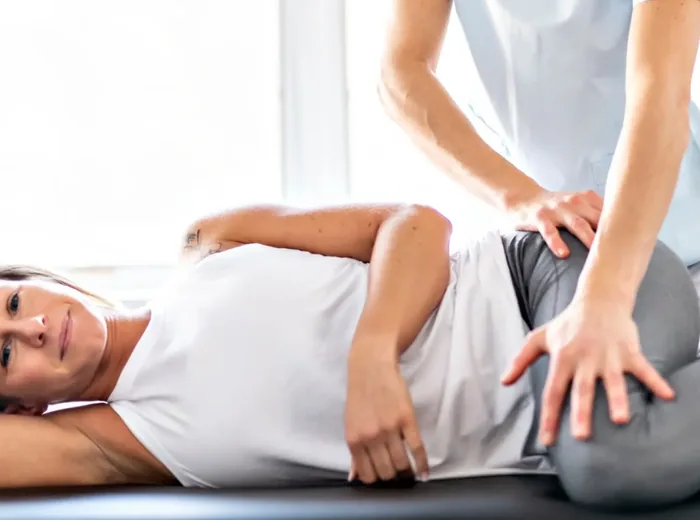
Hip & Knee Pain
Stairs, walking, stiffness that disrupts sleep. We restore the mechanics before we load them.

Chronic Pain
Pain that outlasted the injury. We change how the system responds, not just the tissue.
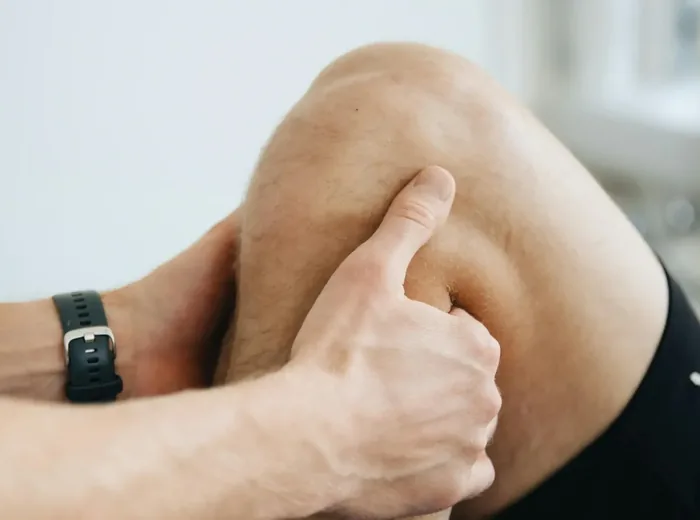
Total Knee Replacement Rehab
From your first days after surgery to the range and strength you actually need back.
Ready when you are.
Fri: 7:00am - 3:40pm