Sports Rehab in Swansea
You have been cleared. Nobody has actually tested whether your body can take a cut, a landing, or a sprint at game speed. Closing that gap is what this service is for.
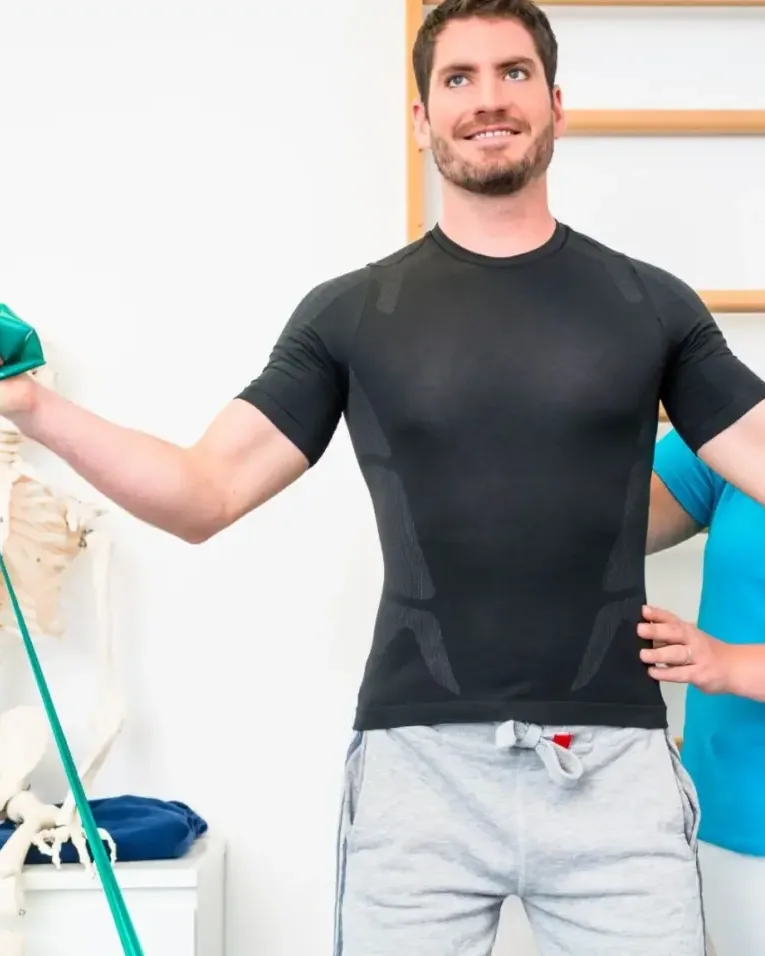
What is sports rehab?
Sports rehab is the programming and the testing that sit between medically cleared and genuinely ready to compete. It is not a catalogue of injuries and it is not general exercise. It is a sequenced plan built around your sport, your position and the demands you actually have to survive: the landings, the changes of direction, the overhead loads, the mileage. This service assumes you already know what hurt. Its job is to answer a different question, which is whether the movement system around that injury holds up when the game stops being predictable.
Testing is what makes the answer honest. We use the Y Balance Test to compare single leg control side to side, the Functional Movement Screen to identify limitations in your basic patterns, and Move 2 Perform, a scoring tool that feeds those results into four risk categories: Optimal, Slight Deficit, Moderate Deficit and Substantial Deficit. Your category sets your starting point and gives us a number to retest against instead of an impression of how you look. Programming runs in 40 minute one on one appointments in Swansea or Providence. Dr. Zach Pereira is a certified strength and conditioning specialist and a former collegiate soccer player, and Dr. Greg Specht completed a sports medicine fellowship at the American Sports Medicine Institute in 1993 and now teaches movement assessment to other clinicians.
Who it's for.
Athletes arrive here at three different points, and the programming looks different for each. What they share is a deadline and a body that has to meet it.
Mid season, back from surgery or injury
You have a date you want to play by and a body that is not there yet. The plan works backward from that date, through calming the area, then strength, then sport speed, with a test at every handoff. The outcome we work toward: a return based on criteria you can see rather than a guess about how you feel.
Healthy, but not performing like you should
Nothing is injured. Your first step is slower, one side jumps lower than the other, or you fade in the last quarter. Screening finds the asymmetry or the mobility limit that is capping your output. The outcome we work toward: a training focus set by what actually tested poorly, not by what you assume is weak.
The same injury keeps finding you
Third hamstring. Second ankle. You do not need another few weeks of rest, you need to know what keeps setting it up in the first place. Y Balance and movement screening put real numbers on the deficit. The outcome we work toward: training the actual gap instead of repeating the same season again.
What to expect in a session.
A return to sport plan runs in phases, and you do not advance on a calendar. You advance when you pass the test for the next phase.
Baseline testing and a sport profile
You describe your sport, position, level, competition schedule and injury history. We test movement quality, single leg control, strength and the patterns your sport genuinely demands, then score it. You leave that first visit knowing your risk category and exactly which measures have to change before the next phase opens.
Rebuild, then add speed and chaos
Early sessions calm the area and rebuild strength and control in predictable positions. From there the work gets faster and less predictable: plyometrics, cutting, deceleration and drills that look like your position rather than like a gym circuit. Manual therapy or dry needling clears whatever is limiting that day's session.
Return to sport testing, then maintenance
Before full return you repeat the same measures from day one, side to side and at speed. Passing them is the clearance conversation, and falling short tells us precisely what is left to build. You leave with the short weekly program that keeps those numbers where you just got them, through the rest of your season.
Bring the shoes you compete in, any brace or tape you use, and a clip of your position in action if you have one. Where a surgeon or physician is involved, we share your testing results and plan of care with them, so the return decision is a shared one based on measurements rather than on how you say you feel that week. If your numbers say you are not ready, we will tell you plainly, even when the calendar disagrees.
My experience at Specht was a successful one. I want to thank my physical therapist and Tyler for all their help and time given to my needs. Their professionalism and knowledge was greatly appreciated.
Where to go next.
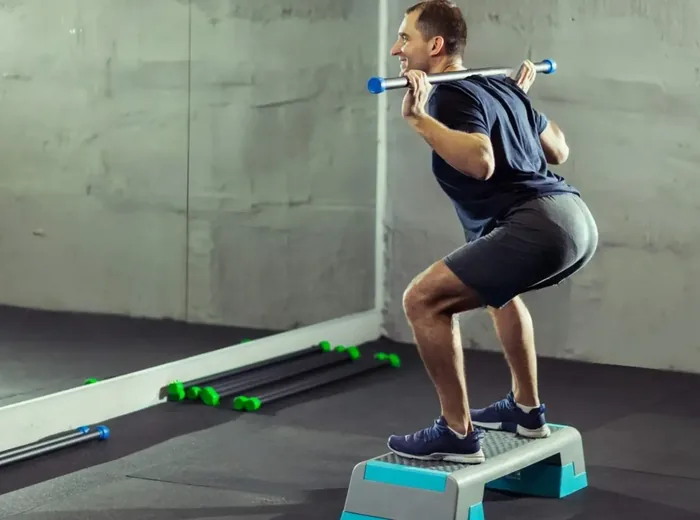
Move 2 Perform
Your FMS and Y Balance results scored into a clear risk category, so the plan has a target.
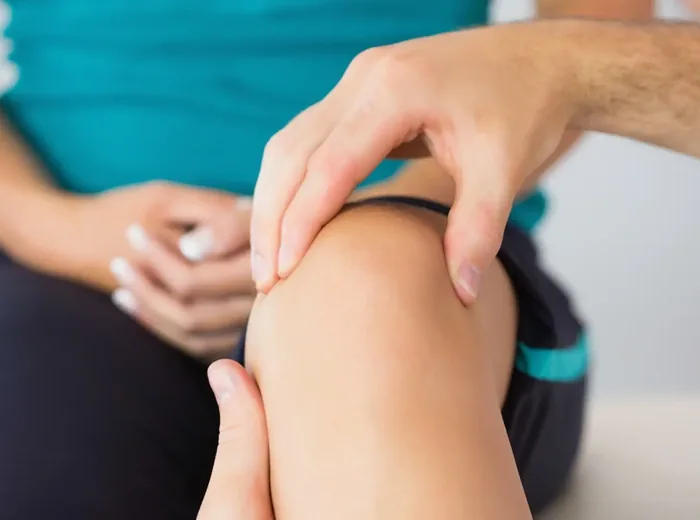
ACL Tear
Rebuild strength and stability after an ACL injury, and return to sport tested, not guessed.
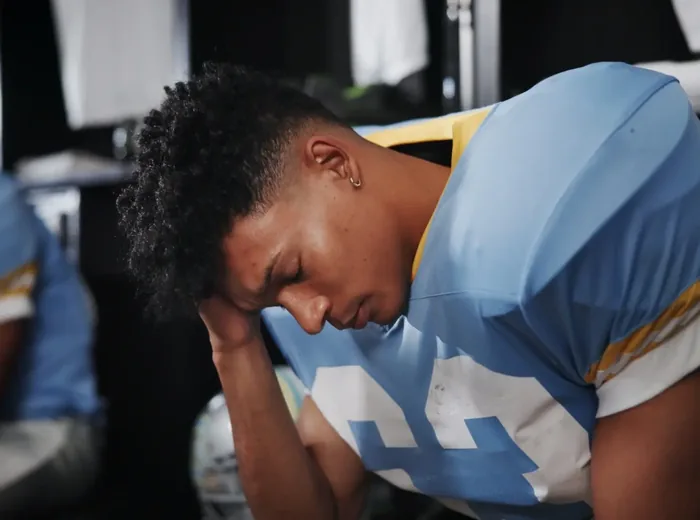
Sports Injuries
Return-to-play built around your sport, your position and your actual timeline.
Ready when you are.
Fri: 7:00am - 3:40pm