Manual Therapy in Swansea
Turning your head only goes so far before it simply stops. Reaching the top shelf costs you something. That is a joint that has lost part of its range, and stretching on your own rarely gets it back.
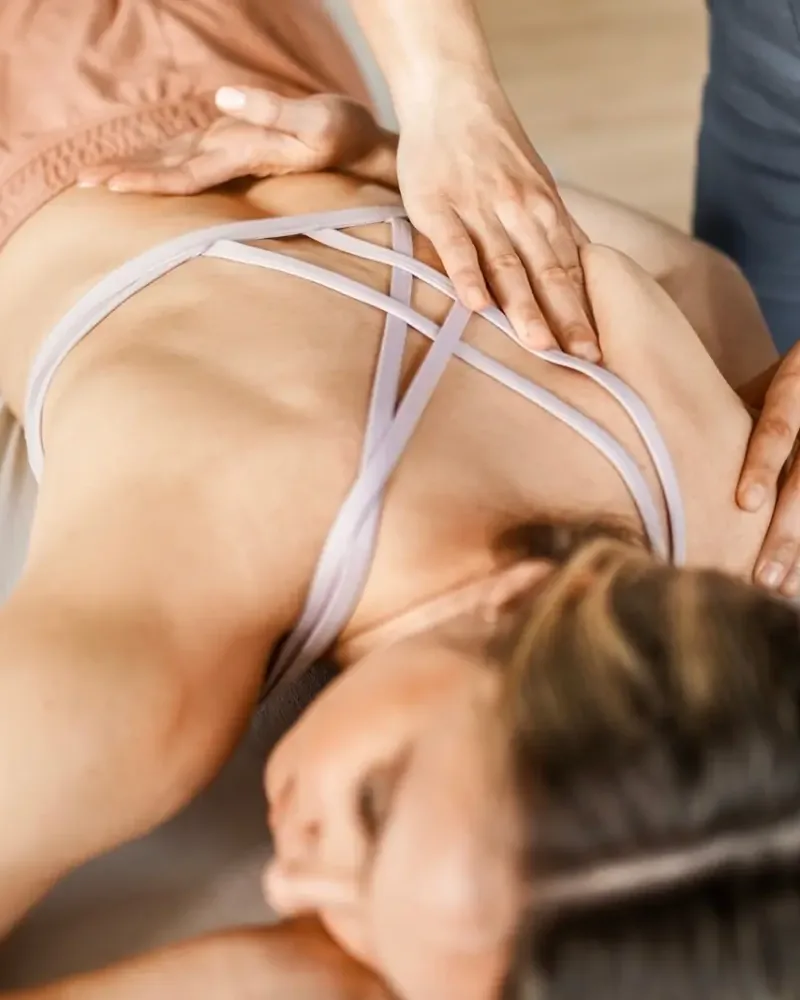
What is manual therapy?
Manual therapy is skilled hands-on treatment aimed at one specific joint or one specific band of soft tissue. Your therapist takes the joint to the exact point where it stops, then applies graded pressure or a small repeated glide right at that barrier to restore the accessory motion the joint has lost. It is precise and it is short. Most of the work at a single joint takes a few minutes. Alongside joint mobilization we use soft tissue mobilization to free tight muscle, manual traction to reduce pressure on a compressed joint or nerve root, and neuromuscular re-education to retrain you out of the compensation that built up while you were stiff.
What it feels like is firm, local pressure at a joint line, usually a strong stretch, sometimes a release you can feel or hear. It should never be sharp. This is not massage and it is not a relaxation treatment. The target is a joint that will not move rather than a muscle that will not settle, which is why manual therapy is the choice when range of motion is measurably short on one side. At the Swansea and Providence offices it happens inside your 40 minute one on one appointment, and exercise follows it immediately, because range you gain on the table and never load is range you lose by the weekend. Dr. Greg Specht and Dr. Zach Pereira are both board-certified orthopaedic clinical specialists, and skilled joint work sits at the core of that specialty.
Who it's for.
Manual therapy is the right tool when something is mechanically stuck rather than simply sore. These are the three presentations that most often lead to hands-on joint work.
A neck or back that has stopped turning
You cannot check a blind spot without swinging your shoulders around. Bending to your shoes has become negotiable. Mobilization at the segments that are genuinely restricted gives the motion back, and the muscles guarding around them stop working overtime. The outcome we work toward: measurable range you notice inside the same visit.
A joint that stiffened after an injury
An ankle, a shoulder or an elbow that healed but never moved the same way again, often after time in a cast or a sling. Capsular tightness and scar limit the joint long before the muscle ever tires. The outcome we work toward: range that matches the other side again, so strengthening finally has somewhere to go.
Sciatica or pressure running down a limb
The pain is in your leg, but the trouble is where the nerve leaves your spine. Manual traction and segmental mobilization reduce that pressure, and we track how far down the limb your symptoms travel. The outcome we work toward: symptoms pulling back toward the spine, which is the sign that actually matters.
What to expect in a session.
Manual therapy is not a standalone appointment. It is the part of your session that changes what is possible in the part that follows it.
Finding the segment that is actually stuck
Your therapist moves each joint in the region on its own, comparing it against the other side and against what should be available there. You will feel exactly where it stops. That measurement becomes the baseline we retest at the end of the session, which keeps the work a matter of evidence rather than opinion.
Graded hands-on work at the barrier
The therapist holds the joint at its limit and applies sustained pressure or a repeated small glide. Pressure is graded and you can ask for less at any point without derailing the session. Soft tissue mobilization, manual traction or myofascial release may be added depending on whether the block turns out to be joint, muscle or fascia.
Remeasure, then load the new range
We test the same motion again. If you gained range, you use it immediately in a controlled exercise so your nervous system claims it as normal. You go home with the one or two movements that hold the change, and your next visit opens by checking whether it held.
Wear clothing that lets your therapist reach the area being treated, and say something the moment pressure stops feeling productive. Whether hands-on joint work suits you is decided at your evaluation. Your therapist reviews your medical history first, including recent surgeries, fractures, injections and any joint or bone condition you have been diagnosed with, and matches technique and pressure to your mobility and comfort. Mild achiness for a day afterward is common as a joint adapts. Sharp or spreading pain is not, and it is worth a call to Swansea or Providence.
Amelia and Tyler were wonderful! I really appreciated how attentive they were to my care, listening to my concerns, questions and needs. I feel so much better thanks to their help!
Where to go next.
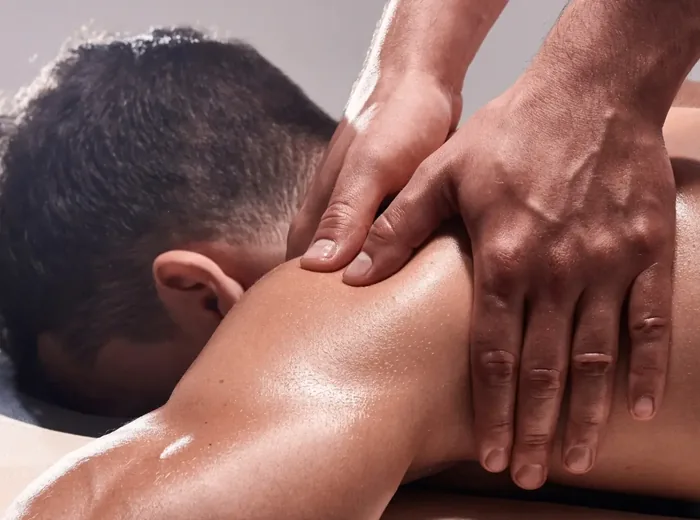
Myofascial Release
Sustained pressure through restricted fascia to give the tissue its glide back.
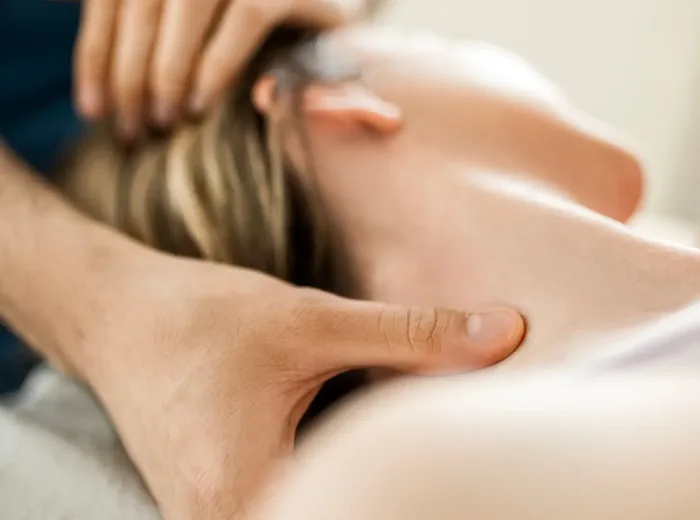
Neck Pain
Stiffness, radiating pain and the headaches that come with it. We treat the neck and what is pulling on it.
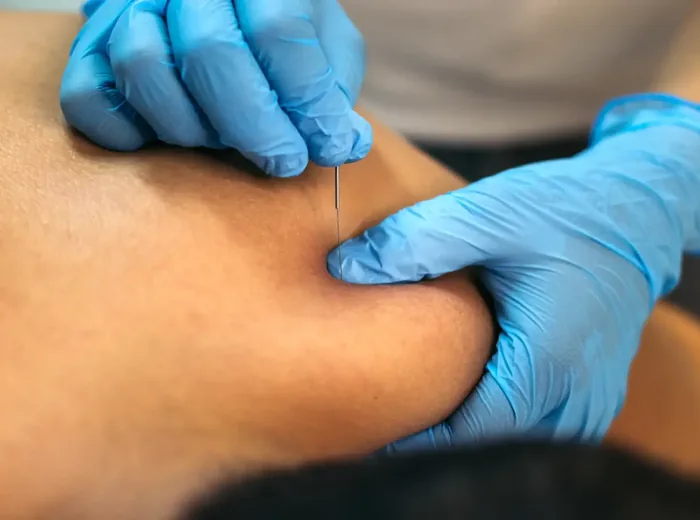
Dry Needling
A thin needle into the trigger point to release what stretching alone will not.
Ready when you are.
Fri: 7:00am - 3:40pm