Balance & Gait Disorder Therapy in Swansea
You have started planning your day around your footing. Watching the ground, skipping the uneven walk, taking the rail on the way down. That narrowing almost always starts with something specific, and specific things can be measured and trained.
What causes balance and gait disorders?
Balance is not one sense. It is the strength in your legs, the sensation coming up from your feet, what your eyes can see, and the systems that coordinate all of it, so unsteadiness means at least one of those has stopped pulling its weight. The way you walk usually gives away which one. Slow shuffling steps, feet that no longer clear the ground, a stance that has quietly widened to buy stability, a foot that freezes mid-step while the rest of you keeps going. None of that is simply age, and none of it gets solved by being more careful.

Standing up from a chair, catching yourself after a trip, and getting down a staircase all draw on hip, knee, and ankle strength, and that strength drops off faster than most people notice. Once it falls below what a stumble demands, you simply cannot make the correction in time. This is the most directly fixable cause on the list, and it is also the most common one we find.
Your feet report the ground back to your brain continuously. Peripheral neuropathy from diabetes, age, or nerve damage mutes that report, so you feel steady in bright light on a smooth floor and far worse in the dark or on grass and gravel. Training the ankles and hips to react without waiting on that information restores much of the lost margin.
Vision does more of the balance work than people realize, so new glasses, bifocals, cataracts, or reduced depth perception all change what you have to work with. Bifocals in particular blur the ground at exactly the distance a staircase occupies. Part of the plan is training you to stay upright on the days the visual information is poor.
Dizziness and unsteadiness are listed side effects for a long list of common prescriptions, and adding one, or several, can tip over someone who was already borderline. Which medication and whether it changes is a conversation for your prescriber. What we can do is review what you are taking, flag what is worth asking about, and rebuild the parts of the system that are under your control.
A few weeks off your feet from a hospital stay, a procedure, or a bad bout of illness takes strength and coordination with it, and neither comes back on its own just because you are home again. This is the group the balance conversation usually skips, because there is no diagnosis to point at. There does not need to be one for training to work.
After a fall, or a close call, the natural response is to move less and hold on more. Moving less costs you strength, and holding on means your balance reactions never get practised, so the next stumble is harder to catch than the last. Breaking that loop takes being challenged somewhere that going over is not on the table.
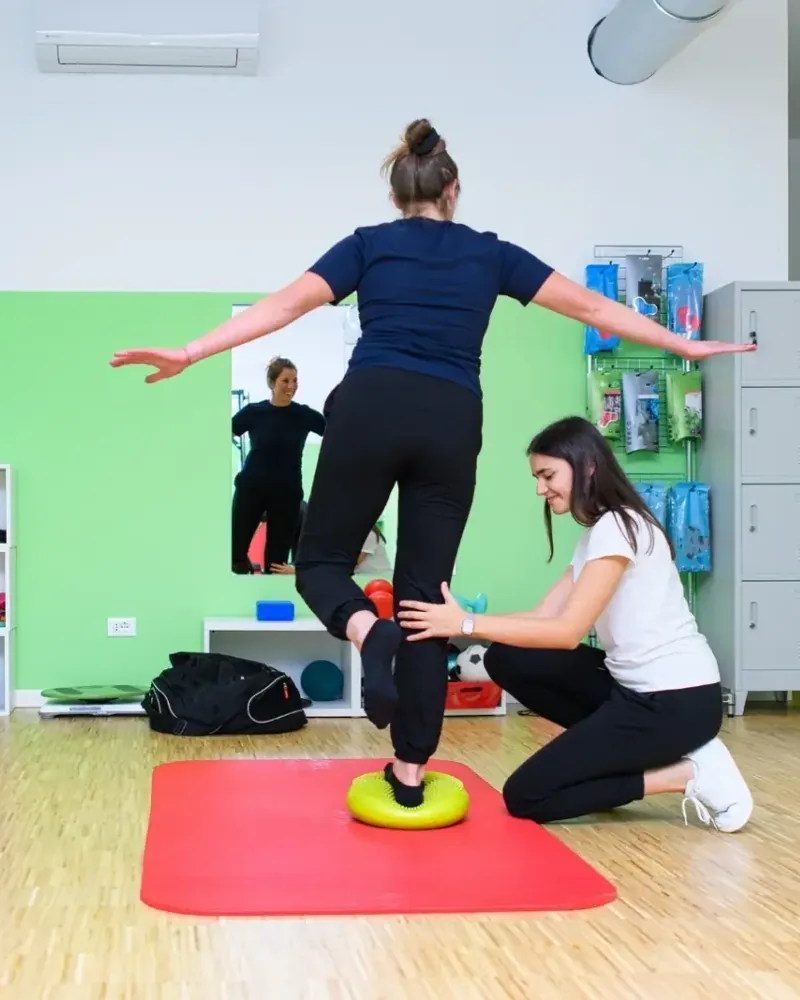
How physical therapy in Swansea helps.
The first visit is measurement, because you cannot train what has not been identified. Our licensed physical therapists watch you walk and look at step length, walking speed, symmetry, and how your body reacts when your balance is disturbed. We test strength to find the specific weak links, check range of motion where stiffness is shortening your stride, review your medication list for anything that might be adding to it, and take an honest look at whether a cane or a walker would give you more freedom rather than less. The Y Balance Test gives us a measured baseline for single-leg control, so progress is something we can show you rather than something you take on faith. Physical Therapy carries the strength and gait work, Manual Therapy loosens the stiff ankles and hips that are cutting your step short, and if the testing points at your inner ear as part of the picture, Vestibular Therapy handles that side of it.
Training happens where it is safe to be pushed. Parallel bars, a gait belt, and a therapist beside you mean we can take you to the edge of your balance without you paying for it. The support comes away as your reactions get quicker. We build toward the exact things you have stopped doing, whether that is a gravel driveway, a staircase without a rail, or carrying groceries in from the car, at our Swansea clinic or in Providence. Some changes should not wait for an appointment. Sudden weakness or numbness on one side, a drooping face, slurred speech, sudden loss of vision or coordination, a fall where you hit your head or could not get up, or a sudden unexplained change in how you walk all need emergency care right away. Balance that has been slipping for months is our work. Balance that changed today is not.
What to expect from your recovery.
Measure everything
We assess your gait, strength, range of motion, and balance reactions, and we review your medications and any device you are already using. That gives us a baseline and a clear picture of your fall risk. You leave knowing which link in the chain is the weak one.
Build strength, then retrain the reactions
Ankle stability, knee control, and hip strength come first, because a correction depends on all three. Then we train the reactions themselves, with support at first, and add endurance so a longer walk stays safe rather than becoming the risk. Most people come 2 to 3 times a week.
Take it into the real world
The exercises deliberately start to look like your life: turning your head while walking, uneven ground, stairs, doorways, crowded aisles. Confidence comes back from doing those things successfully, not from being told you are ready.
Highly professional yet friendly and personable atmosphere. Instructions for home exercises were clear. Hands-on therapy was rigorous and thorough.
Pain rarely travels alone.

Dizziness & Vertigo
The room spinning when you turn or lie down. Often treatable in a handful of visits.
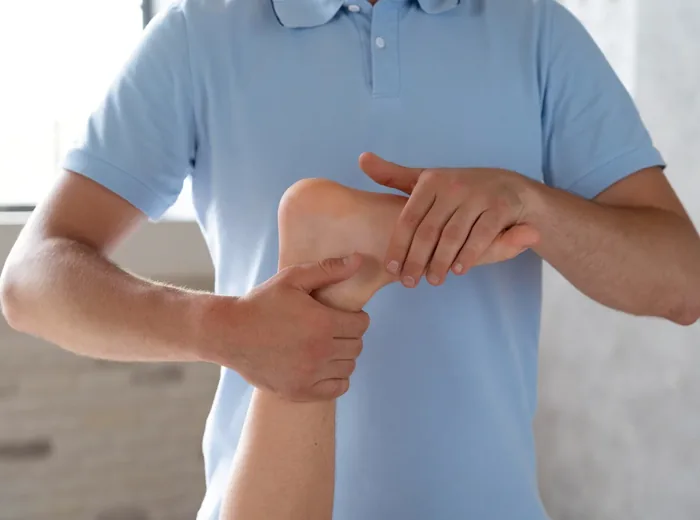
Foot or Ankle Pain
Plantar pain, sprains that keep coming back, and the gait pattern underneath them.
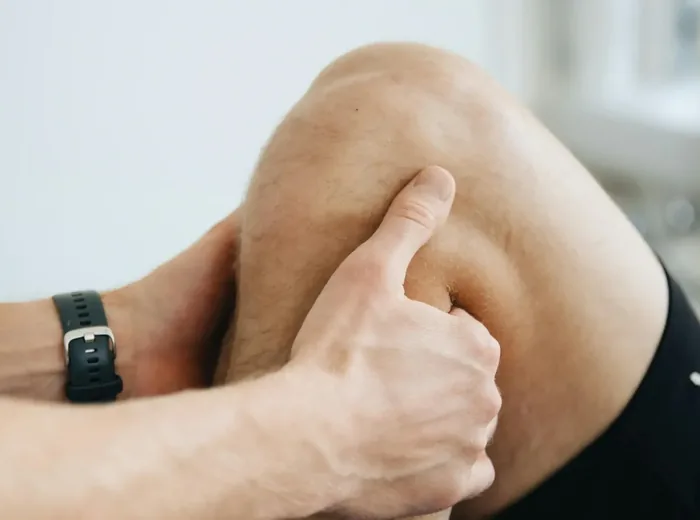
Total Knee Replacement Rehab
From your first days after surgery to the range and strength you actually need back.
Ready when you are.
Fri: 7:00am - 3:40pm