Running Coaching in Swansea, MA
Your watch knows your pace and your mileage. It does not know why the same calf, the same knee, or the same hip gives out at the same point in every build.

What is running coaching?
Running coaching here is a training plan written by people who also treat running injuries for a living. It begins with your history and the goal you are chasing, then adds the part most plans skip entirely: we film you running and watch it back with you, slowed down, so you can see what your body is doing at footstrike instead of what you assume it is doing. Where your foot lands relative to your hips. How much motion escapes sideways. What your trunk does once you are tired. From there we test the strength and mobility that those mechanics depend on, and the plan gets built out of what we found: weekly volume, how hard the hard days actually are, recovery, and the specific strength and mobility work your form needs in order to hold together late in a long run.
That combination is the whole difference. A coach can write you an intelligent plan, and a therapist can treat your calf, but the runner who keeps breaking down needs both of those in the same room looking at the same video. Dr. Zach Pereira is an NSCA certified Strength and Conditioning Specialist, a MoveNat instructor and a former collegiate soccer player, and there are board certified orthopaedic clinical specialists on staff, so a mechanical problem gets identified and treated rather than coached around. If you want objective movement numbers under the plan, we can screen the seven patterns with Functional Movement Screening or measure single leg control with the Y Balance Test. Coaching runs at Swansea and Providence, forty minutes at a time, one on one.
Who it's for.
Coaching works for any distance and any pace. What matters is which of these three problems you are actually trying to solve, because they get very different plans.
New to running and want it to last
You are starting from walking, or from nothing, and every plan online assumes a base you do not have yet. We set your starting volume and your progression from what your body currently tolerates, which is the reason most new runners get hurt in month two.
You break down at the same point every build
Twenty miles a week is fine. Twenty five is where the trouble starts. That is a mechanics and capacity ceiling rather than a discipline problem, and between the video and the strength testing we can usually locate it in one session.
Chasing a time that stopped moving
There is a race on the calendar and your mileage has stopped buying you anything. We look at running economy, at how your intervals are structured, and at where your form falls apart late in a session, then rebuild the block around that.
What to expect from your first session.
The first appointment is mostly assessment, because a plan written without watching you run is a guess dressed up as a schedule. You will run, you will watch yourself run, and you will leave with the first block written.
Mileage, history and the goal
What you are running now, what you have raced, what has gone wrong before, the surfaces you train on and the shoes you train in. Then the goal, stated as a real thing: a distance, a time, or getting through a season without stopping.
Video gait analysis
We film you running at your own pace and replay it slowed down while you watch. Your therapist points out the specific things worth changing, and just as importantly, the things that look unusual but are not costing you anything.
Strength, mobility and single leg control
Hips, calves, ankles and trunk get tested, because a form fault almost always traces back to something that cannot hold its position under fatigue. Cueing a change your body cannot support is how people get hurt.
The plan and the reassessment
You leave with weekly structure, progression rules, and the strength work that goes alongside the running. Then you come back so we can re film and retest, and the plan changes when the reassessment says it should.
Bring the shoes you actually run in, and if you log your runs, the last few weeks of mileage. Wear what you would normally train in, because you will be running. No plan here promises injury free running, and any coach who does is guessing.
Jesse was great and he really helped me gain hip strength. He is very kind! The one downside is how small the mat area is-you literally feel part of everyone’s treatment.
Where to go next.
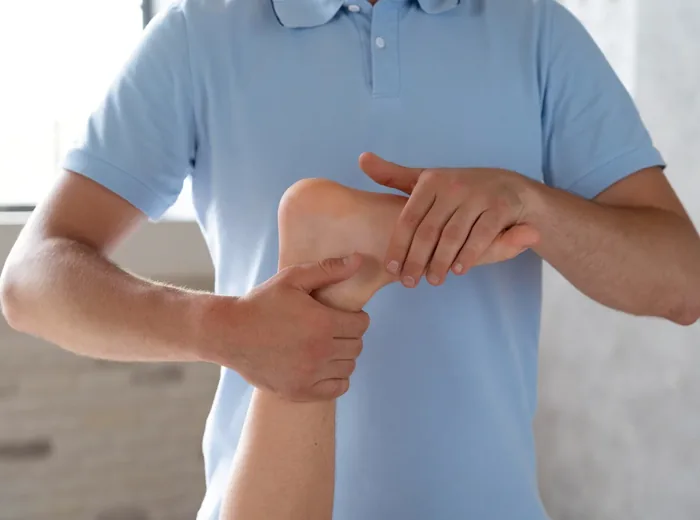
Foot or Ankle Pain
Plantar pain, sprains that keep coming back, and the gait pattern underneath them.
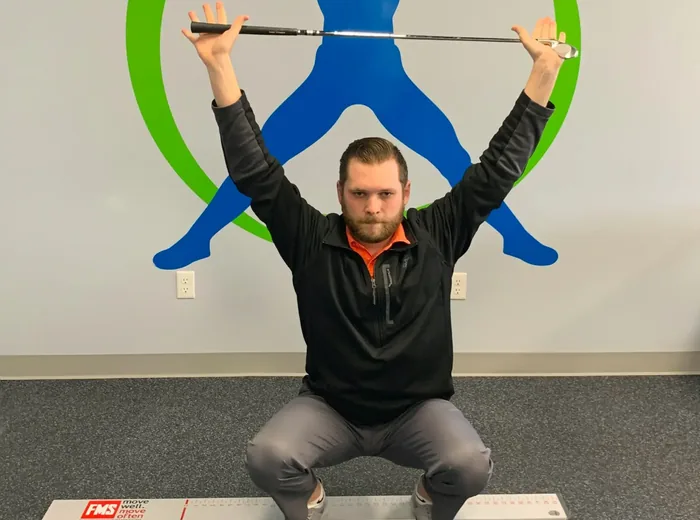
Functional Movement Screening (FMS)
Seven movement patterns, scored, to show which limitation is doing the damage.

Hip & Knee Pain
Stairs, walking, stiffness that disrupts sleep. We restore the mechanics before we load them.
Ready when you are.
Fri: 7:00am - 3:40pm