Nerve Pain Treatment in Swansea
Burning, tingling, and shocks that run down a limb are nothing like a sore muscle, and the stretching advice you have been given does not touch them. Nerve pain has a source somewhere along the wiring. Finding it is the first real step.
What causes nerve pain?
Your nervous system is the wiring that carries signals between your brain and the rest of your body. When a nerve is compressed, irritated, or damaged anywhere along that route, it can send relentless pain even with nothing visibly wrong at the place that hurts. That is why nerve pain so often shows up in a foot when the problem sits in the low back, and why treating the foot changes nothing. Sciatica and diabetic neuropathy are the two versions we see most, and they need very different plans.

A disc that bulges or a bony spur in the spine can press on a nerve root right where it exits, and the pain then travels down the arm or the leg along that nerve's territory. In the low back this is what most people mean by sciatica. Because the pain is felt far from the compression, treating the leg or the arm on its own rarely changes anything at all.
Sustained high blood sugar damages the smallest nerves first, usually in the feet, producing burning, tingling, and numbness on both sides. Numb feet also stop reporting where the ground is, which is why balance and walking often suffer alongside the pain. Blood sugar management belongs with your physician, and our work is the strength, sensation, and balance side so the numbness costs you less.
Repeated use of the hands, wrists, or a single joint can thicken and tighten the tissue a nerve has to pass through, squeezing it inside a narrow tunnel. Symptoms build slowly and are usually worst at night or after a long stretch of the same task. Changing how and how often you load that area matters as much as anything we do to the tissue itself.
Nerves are built to glide, sliding through muscle and connective tissue as you move rather than staying anchored in one spot. Scar tissue, swelling, or long-standing tightness can tether a nerve so it gets tugged instead of gliding, which reads as a sharp or electric pull at the end of a movement. Guided movement and nerve gliding restore the slack it has lost.
Some conditions, including multiple sclerosis and fibromyalgia, leave the nervous system more reactive, so ordinary signals get amplified into pain. Physical therapy does not treat the underlying condition and we will not pretend otherwise. What it can do is improve how you move, hold onto strength, and lower the daily load on a system that is already irritated.
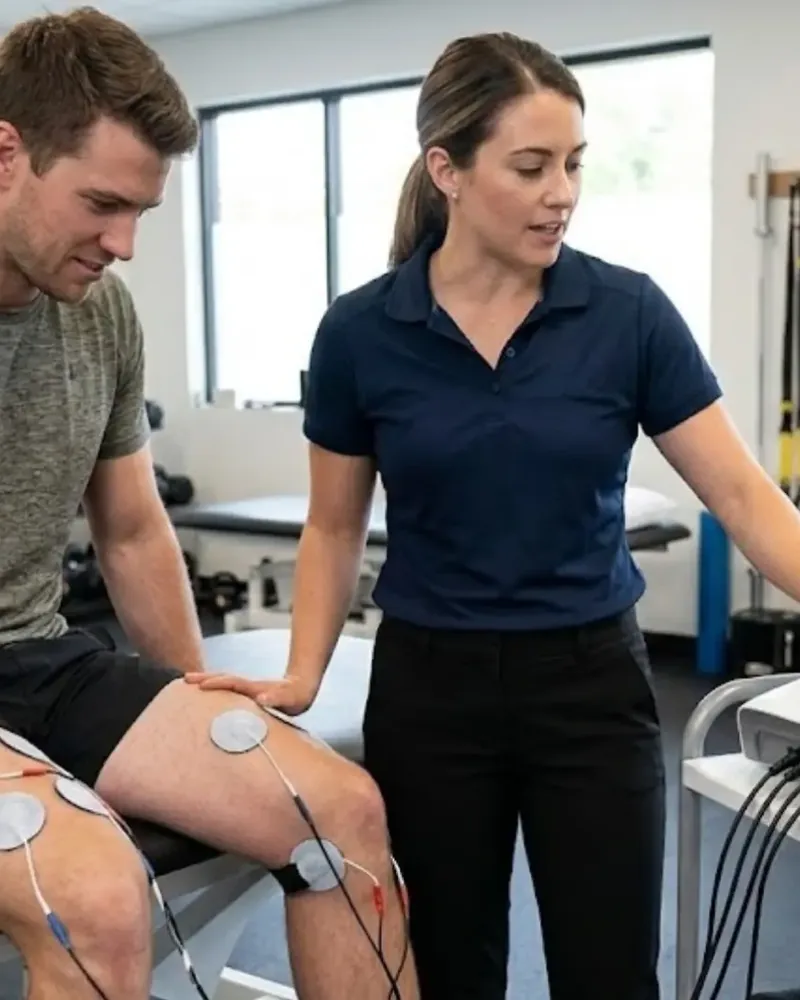
How physical therapy in Swansea helps.
Nerve pain needs a different plan than muscle or joint pain, and the first decision is where along the route the trouble actually sits. Our licensed physical therapists test movement, strength, reflexes, and sensation to separate a compressed nerve root in the spine from an entrapment further down the limb, because those two are handled in almost opposite ways. From there Manual Therapy takes pressure off the irritated segment and frees the tissue the nerve travels through, guided nerve gliding restores the slack it has lost, and Dry Needling settles the muscle spasm that keeps clamping down on it. NEUBIE E-Stim is available where a muscle has gone quiet and will not switch back on with exercise alone. Sessions run 40 minutes, one-on-one, in Swansea or at our Providence office, and the plan gets rebuilt as your symptoms move.
We will be straight with you about the outcome. Many people get substantial, lasting relief, and some nerve pain, particularly long-standing neuropathy, becomes something you manage well rather than something that disappears. You will hear that at the evaluation instead of a promise that sounds better. A few symptoms need a physician before therapy: worsening weakness in a limb, a foot that drops or catches when you walk, numbness in the saddle area between your legs, or any new change in bladder or bowel control. Call your doctor or go to urgent care for those. Once the worst of the irritation has settled, the work turns to posture, strength, and the daily habits that let the nerve get irritated in the first place.
What to expect from your recovery.
Locating the nerve
The evaluation traces your symptoms back along the nerve's path using movement testing, strength testing, and sensation checks. We are hunting for the level that reproduces your pain and the positions that relieve it. You leave knowing which nerve is involved and what to stop doing this week.
Calming the irritation
Early sessions combine hands-on work, positioning, and gentle nerve gliding to reduce pressure and sensitivity. Most people come 2 to 3 times a week at this stage. The first honest sign of progress is usually that symptoms retreat back toward the spine instead of running the whole limb.
Restoring strength and tolerance
As the nerve settles we rebuild the strength and endurance the pain took, and we load the positions you had been avoiding. For neuropathy we add balance and walking work, because feet that cannot feel the ground raise your fall risk. You finish with a home program built to keep the irritation from coming back.
I highly recommend Specht Physical Therapy. If you want individual attention and treatment by a qualified therapist, Specht offers this.
Pain rarely travels alone.

Back Pain & Sciatica
The reason most people walk through our door. We find what is driving it, not just where it hurts.
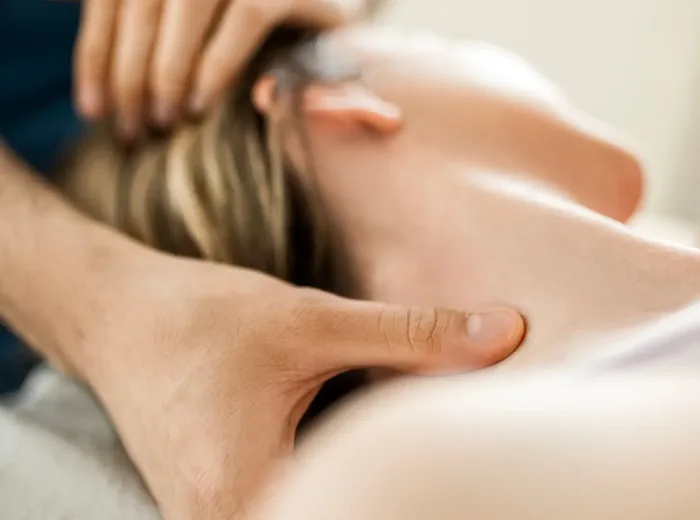
Neck Pain
Stiffness, radiating pain and the headaches that come with it. We treat the neck and what is pulling on it.

Chronic Pain
Pain that outlasted the injury. We change how the system responds, not just the tissue.
Ready when you are.
Fri: 7:00am - 3:40pm