Concussion Treatment in Swansea
Weeks after the hit you still cannot get through a screen, a shift, or a noisy room without paying for it, and everyone keeps telling you these things take time. Time is part of it. It is not the whole plan, and the symptoms still hanging around can be tested.
What causes concussion?
A concussion is a disruption of brain function caused by rapid movement of the head. It changes how the brain uses energy, and that metabolic disruption is what produces the headaches, the fog, the light and noise sensitivity, and the short fuse. Nothing shows up on an ordinary scan, which is part of why people are so often told there is nothing wrong. Most people do recover. When symptoms stay past the first stretch of healing, it is usually because one specific system is still not working properly, and each of those systems can be identified and trained.

A fall, a collision on the field, or a car accident does not have to strike the head to cause a concussion. The head only has to move fast enough. That movement disturbs the brain's metabolism and sets off a cascade of imbalances, which is why the force of the blow predicts the symptoms so poorly and why people who never lost consciousness can still be badly affected.
Straight after the injury the brain is using energy inefficiently, which is why reading, screens, noise, and exertion all cost so much more than they used to. Early on that argues for keeping stimulation down and protecting the system. It does not argue for a dark room until symptoms end, because prolonged inactivity holds recovery back rather than helping it.
The inner ear and the brain systems that read head motion are frequently disturbed by a concussion, which leaves dizziness with head turns and a sense of unsteadiness in busy or open spaces. Balance training and controlled sensory exposure retrain it. Rocker boards and progressively harder balance tasks are the everyday tools for this part of the work.
To read, your eyes have to move together, track smoothly, and converge, and concussions commonly disrupt that coordination. The result is words swimming on the page, headaches after a short stretch of screen time, and fatigue that arrives far too quickly. Eye tracking drills, gaze stabilization, and hand-eye coordination work address it directly.
Whatever moved your head also moved your neck, and neck injury produces headaches, dizziness, and trouble concentrating that look almost identical to concussion symptoms. That overlap means a lot of symptom load gets misattributed and left untreated. Manual Therapy for the lingering muscle tension often takes a surprising amount of it away.
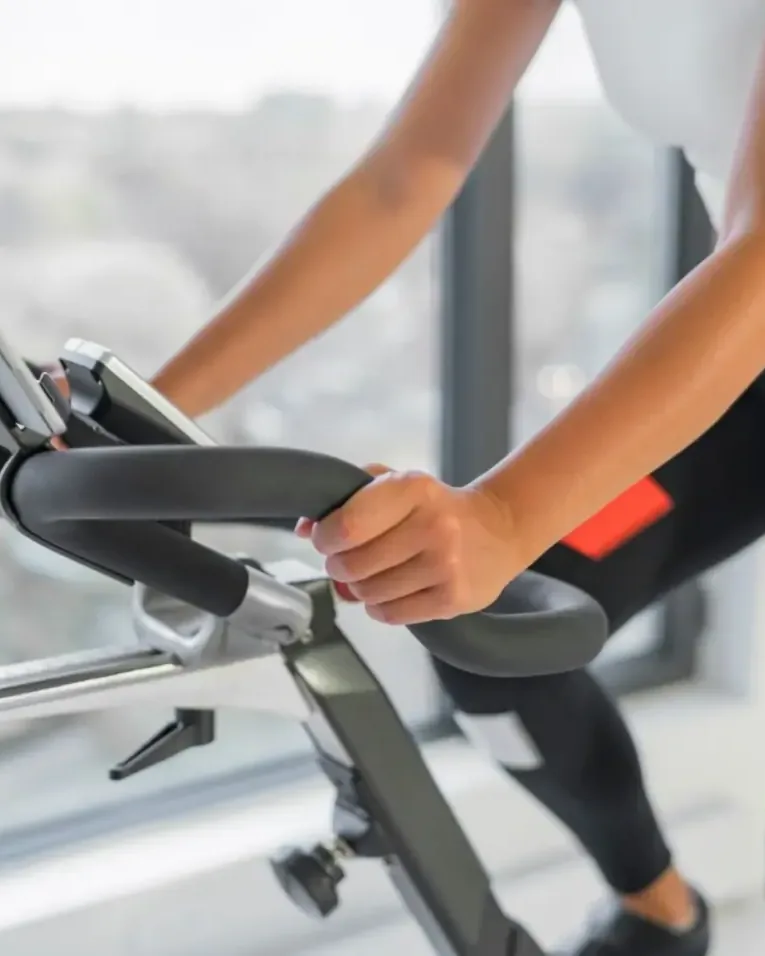
For some people symptoms are quiet at rest and return reliably at a certain level of effort, because the systems regulating heart rate and blood flow are still off. Avoiding exertion altogether leaves that untested, so nobody knows where your ceiling is. Light aerobic work, added gradually and monitored closely, is one of the better supported parts of concussion rehabilitation.
How quickly a brain recovers depends on the severity of the injury, your health history, and factors you do not control, including genetics. That is why average timelines are close to useless for any individual person, and why comparing yourself to a teammate is a bad idea. We track your own symptom response and let that set the pace.
How physical therapy in Swansea helps.
Concussion rehabilitation works by testing which system is still misfiring and then training that one, rather than waiting and hoping. Our licensed physical therapists assess balance, eye movement, neck mobility, and how your symptoms respond to graded effort, and the plan follows what the testing finds. Vestibular Therapy carries the balance and gaze work, using eye tracking drills, gaze stabilization, and progressively harder balance tasks on surfaces like a rocker board. Manual Therapy takes on the neck tension and the headaches that come with it. The Selective Functional Movement Assessment fills in the rest of the picture, because whatever moved your head usually left something else behind too. Light aerobic exercise gets reintroduced gradually and monitored, because a flare costs you days you cannot afford.
What we will not do is recommend supplements, or tell you your symptoms will be gone by a particular date. We work alongside your physician rather than instead of one, in Swansea or at our Providence office. Some symptoms after a head injury are an emergency and belong nowhere near a therapy appointment. A headache that keeps getting worse, repeated vomiting, a seizure, pupils of unequal size, increasing drowsiness or difficulty waking, deepening confusion, weakness or numbness, slurred speech, or any loss of consciousness means going to the emergency department now. For athletes, return to play needs medical clearance, and we will not clear you for contact ourselves. Our job is having you ready for the day your physician does.
What to expect from your recovery.
Evaluation and a starting threshold
We test balance, eye movement, neck mobility, and how much activity you can take on before symptoms climb. That threshold becomes the number we work from rather than a guess. You leave knowing which systems are involved and what your limit is this week.
Train the system that is failing
Vestibular, visual, neck, and aerobic work in whatever combination your testing pointed to, at intensities that stir symptoms slightly without setting you back. We adjust every visit based on how the last one went. Progress usually shows up first as a higher tolerance, before you notice fewer symptoms.
Back to school, work, and sport
We raise the load toward the real thing: a full day of screens, a full shift, a full practice, in that order. For students that means working with the pace of academic demands rather than around them. For athletes, sport-specific coordination and conditioning come last, and only once your physician has cleared you.
Personalized,one on one hands on therapy. Dedicated and knowledgeable staff.
Pain rarely travels alone.

Dizziness & Vertigo
The room spinning when you turn or lie down. Often treatable in a handful of visits.
Neck Pain
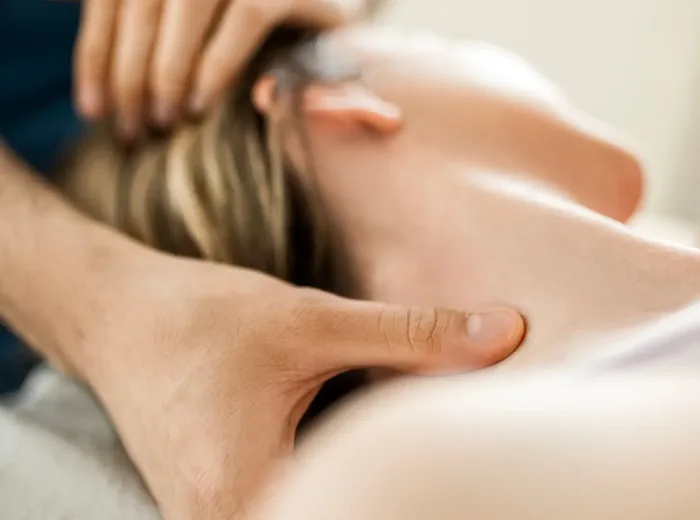
Stiffness, radiating pain and the headaches that come with it. We treat the neck and what is pulling on it.
Balance & Gait Disorders
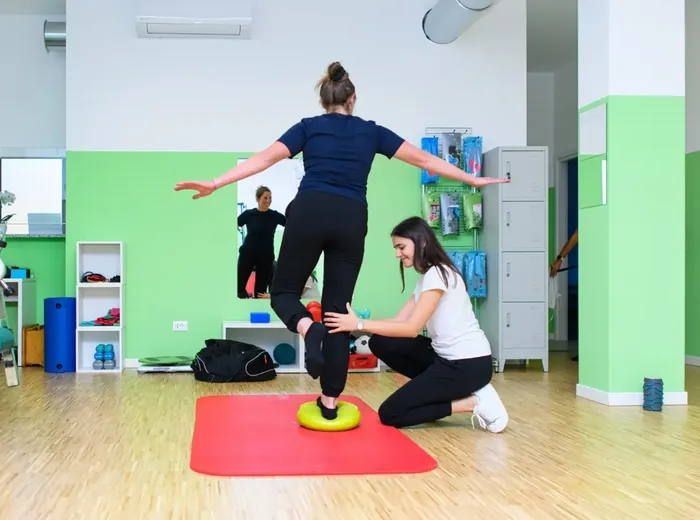
Unsteadiness, near-falls, a walking pattern that changed. Retrain it before it costs you.
Ready when you are.
Fri: 7:00am - 3:40pm