Combining Return-to-Sport Criteria (Conventional and Functional) Following ACL Reconstruction
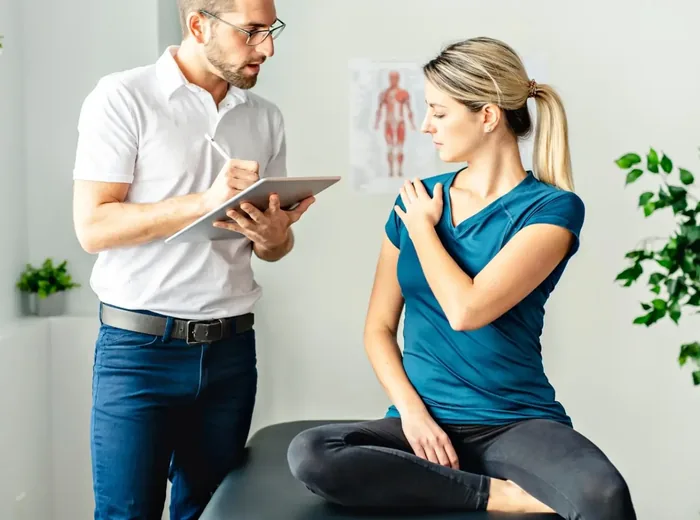
Anterior Cruciate Ligament (ACL) injuries are an all too common occurrence in sports with approximately 100,000 ACL Reconstruction (ACLR) surgeries performed per year in the U.S. alone. Anyone who has had surgery and gone through physical therapy knows how frustrating an injury can be and would probably do almost anything to avoid getting injured again. Unfortunately, the risk of sustaining a second ACL injury is shockingly high. Reinjury rates range up to 37% depending on different factors, with younger athletes appearing to be at greater risk1.
Conventional Return-to-Sport Criteria
Before clearing an athlete to return to sport (RTS) following an ACLR, there are standardized tests for measuring strength, jumping ability, agility, running speed, and self-reported outcomes. The purpose of RTS testing is to indicate when an athlete can safely play their sport. However, research published in the Journal of Orthopaedic and Sports Physical Therapy has shown that individuals who pass conventional RTS criteria before getting back on the field are only 3% less likely to reinjure their ACL than those who don’t pass the criteria1. This is a sobering statistic but not surprising given what other research has shown.
Why are ACL re-injury rates so high?
Prior Injury and Persisting Deficits
A history of any previous injury is known to significantly increase the risk for another injury2,3. Deficits in strength, lower extremity mechanics, and proprioception often persist at two years following ACL surgery and may continue for up to 20 years1.
Motor Control Changes and Asymmetry
Following an injury, a neuromuscular phenomenon can occur that results in inhibition or hyperactivity of muscle firing patterns, which can adversely affect balance, motor control, and joint mechanics4-6. Also, there is a higher likelihood of lower body injury when right and left lower extremity balance is not symmetrical7,8.
Non-Functional Approach
Rehabilitation protocols that only consider standard RTS criteria without examining functional movement patterns can miss factors known to place unhealthy stresses on the ACL including lateral displacement of the trunk during single leg activities and unequal limb loading along with other influences9.
A Functional, Data-Driven Solution
Because improving motor control, balance, proprioception, and asymmetrical movement patterns can reduce injury-risk5-8,10, it makes sense that clinicians should measure these factors to address deficiencies. Fortunately, there is a suite of measurement tools known as Functional Movement Systems (FMS) that are well suited to this task10-14 including:
- Functional Movement Screen
- Y-Balance Test
- Selected Functional Movement Assessment
- Fundamental Capacity Screen
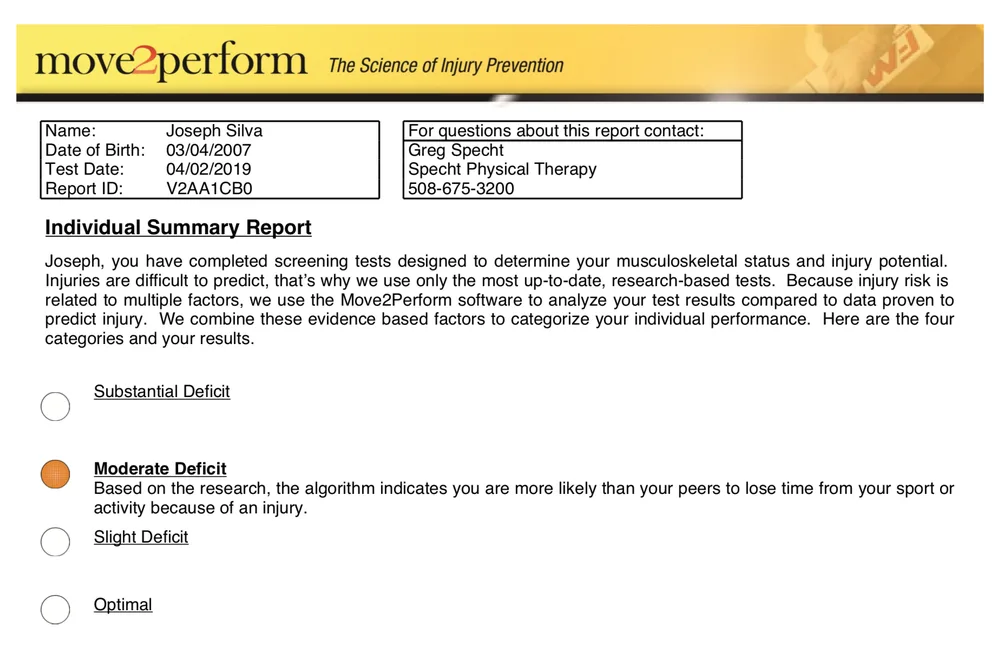
With FMS used in conjunction with standard RTS criteria and protocols, a complete program can be developed to get athletes on the field of play and keep them there. Move2Perform is a movement analysis system that uses a data-driven algorithm to analyze results from FMS to compare an athlete’s movement patterns to their peer group based on sport, age, and competitive level to provide an accurate injury-risk analysis16. The strength of this approach is minimizing the likelihood of missing relevant information when making return-to-sport decisions.
See Sample Report
References
- Losciale JM, Zdeb RM, Ledbetter L, Reiman MP, Sell TC. The Association Between Passing Return-to-Sport Criteria and Second Anterior Cruciate Ligament Injury Risk: A Systematic Review With Meta-analysis. J Orthop Sports Phys Ther. 2019 Feb;49(2):43-54. https://www.ncbi.nlm.nih.gov/pubmed/30501385 (opens in a new tab)
- Kucera KL, Marshall SW, Kirkendall DT, Marchak PM, Garrett WE Jr. Injury history as a risk factor for incident injury in youth soccer. Br J Sports Med. 2005 Jul;39(7):462. https://www.ncbi.nlm.nih.gov/pubmed/15976172 (opens in a new tab)
- Hägglund M1, Waldén M, Ekstrand J. Risk factors for lower extremity muscle injury in professional soccer: the UEFA Injury Study. Am J Sports Med. 2013 Feb;41(2):327-35. https://www.ncbi.nlm.nih.gov/pubmed/23263293 (opens in a new tab)
- Zazulak BT, Hewett TE, Reeves NP, Goldberg B, Cholewicki J. Deficits in neuromuscular control of the trunk predict knee injury risk: a prospective biomechanical-epidemiologic study. Am J Sports Med. 2007 35(7):1123-30 https://www.ncbi.nlm.nih.gov/pubmed/17468378 (opens in a new tab)
- Hides JA, Stanton WR. Can motor control training lower the risk of injury for professional football players? Med Sci Sports Exerc. 2014 Apr;46(4):762-8. https://www.ncbi.nlm.nih.gov/pubmed/24056268 (opens in a new tab)
- Hubbard TJ, Kramer LC, Denegar CR, Hertel J. Contributing factors to chronic ankle instability. Foot Ankle Int. 2007;28(3):343-354. https://www.ncbi.nlm.nih.gov/pubmed/17371658 (opens in a new tab)
- Stiffler MR, Bell DR, Sanfilippo JL, Hetzel SJ, Pickett KA, Heiderscheit BC. Star Excursion Balance Test Anterior Asymmetry Is Associated With Injury Status in Division I Collegiate Athletes. Journal of Orthopaedic & Sports Physical Therapy, 2017 Volume:47 Issue:5 Pages:339-346 https://www.ncbi.nlm.nih.gov/pubmed/28355980 (opens in a new tab)
- Smith CA, Chimera NJ, Warren M. Association of Y Balance Test Reach Asymmetry and Injury in Division I Athletes. Med Sci Sports Exerc. 2014 May 27. https://www.ncbi.nlm.nih.gov/pubmed/24870573 (opens in a new tab)
- Nessler T, Denney L, Sampley J. ACL Injury Prevention: What Does Research Tell Us? Curr Rev Musculoskelet Med. 2017 Sep;10(3):281-288. https://www.ncbi.nlm.nih.gov/pubmed/28656531 (opens in a new tab)
- Gribble PA, Hertel J, Plisky PJ. Using the Star Excursion Balance Test to Assess Dynamic Postural Control Deficits and Outcomes in Lower Extremity Injury: a literature and systematic review. J Athl Train. 2012;47(3):339-57. https://www.ncbi.nlm.nih.gov/pubmed/22892416 (opens in a new tab)
- Kiesel KB1, Butler RJ, Plisky PJ. J Sport Rehabil. Prediction of injury by limited and asymmetrical fundamental movement patterns in american football players. 2014 May;23(2):88-94. https://www.ncbi.nlm.nih.gov/pubmed/24225032 (opens in a new tab)
- Steffen K, Emery CA, Romiti M, Kang J, Bizzini M, Dvorak J, Finch CF, Meeuwisse WH. High adherence to a neuromuscular injury prevention programme (FIFA 11+) improves functional balance and reduces injury risk in Canadian youth female football players: a cluster randomised trial. Br J Sports Med. 2013 Aug;47(12):794-802 https://www.ncbi.nlm.nih.gov/pubmed/23559666 (opens in a new tab)
- Filipa A, Byrnes R, Paterno M, Myer G, Hewett T. Neuromuscular training improves performance on the star excursion balance test in young female athletes. Journal of Orthopaedic & Sports Physical Therapy. 2010;40(9):551-558. https://www.ncbi.nlm.nih.gov/pubmed/20710094 (opens in a new tab)
- Ambegaonkar JP, Mettinger LM, Caswell SV, Burtt A, MS, Cortes N. Relationships between core endurance, hip strength, and balance, in collegiate female athletes. Int J Sports Phys Ther. 2014 Oct; 9(5): 604-616. https://www.ncbi.nlm.nih.gov/pubmed/25328823 (opens in a new tab)
- Lehr ME, Plisky PJ, Kiesel KB, Butler RJ, Fink M, Underwood FB. Field Expedient Screening and Injury Risk Algorithm Categories (Move2Perform) as Predictors of Non-Contact Lower Extremity Injury. Scan J Med Sci Sport. 2013 Aug;23(4):e225-32 https://www.ncbi.nlm.nih.gov/pubmed/23517071 (opens in a new tab)
More from the clinic.
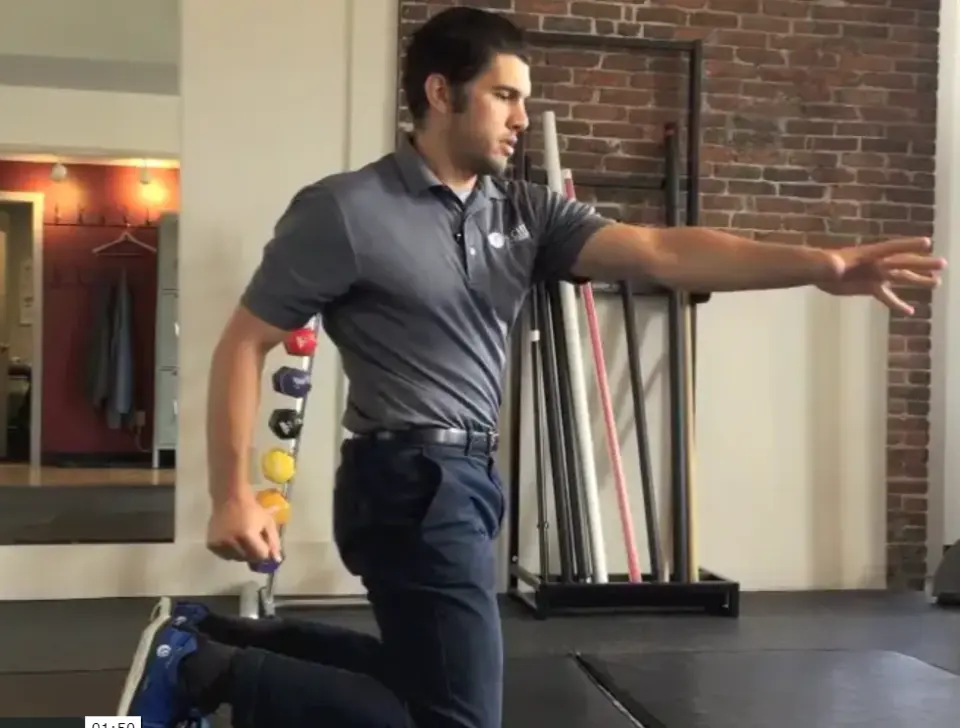
Exercise of the Week: Proper Gardening Technique #2- Tall Kneeling Posture
The second posture in the series, this tall kneeling technique will help prevent back pain while performing regular…
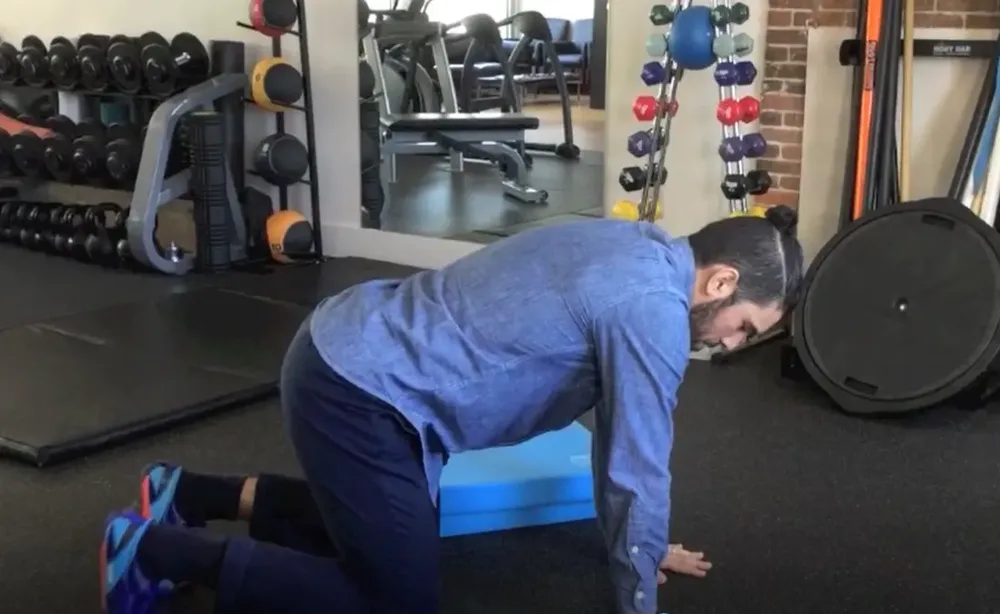
Exercise of the Week: Proper Gardening Technique #1 - Quadruped Position
Spring is here and, for many of us, that means spending time in the garden! Following proper gardening techniques…
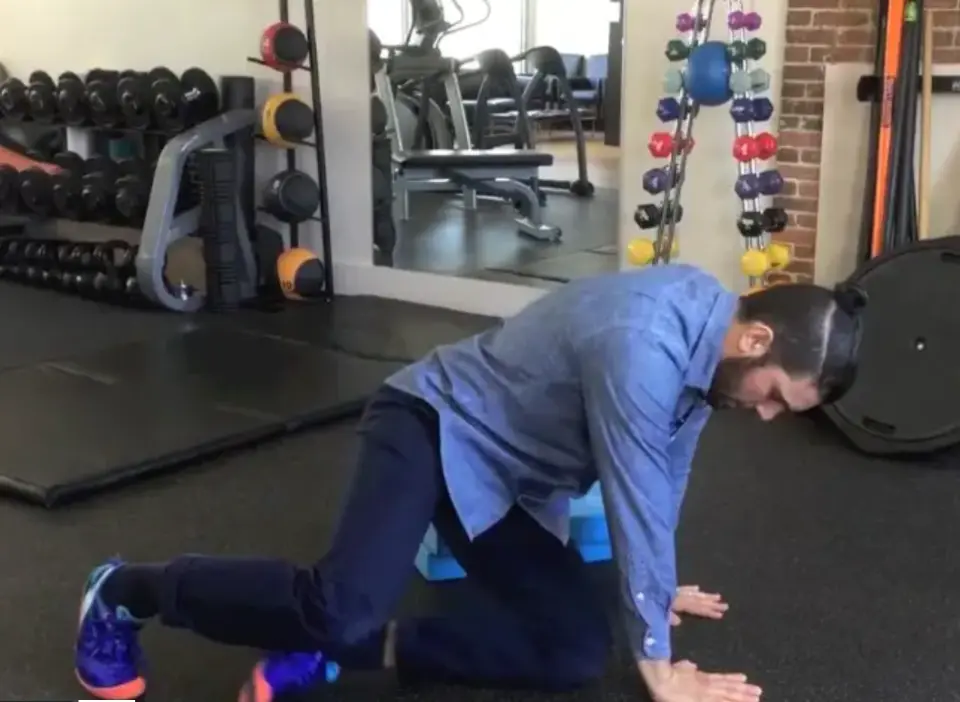
Exercise of the Week: Proper Gardening Technique #3: Sitting to Quadruped
This transition technique, moving from a seated position to hands and knees, will help prevent straining the back…